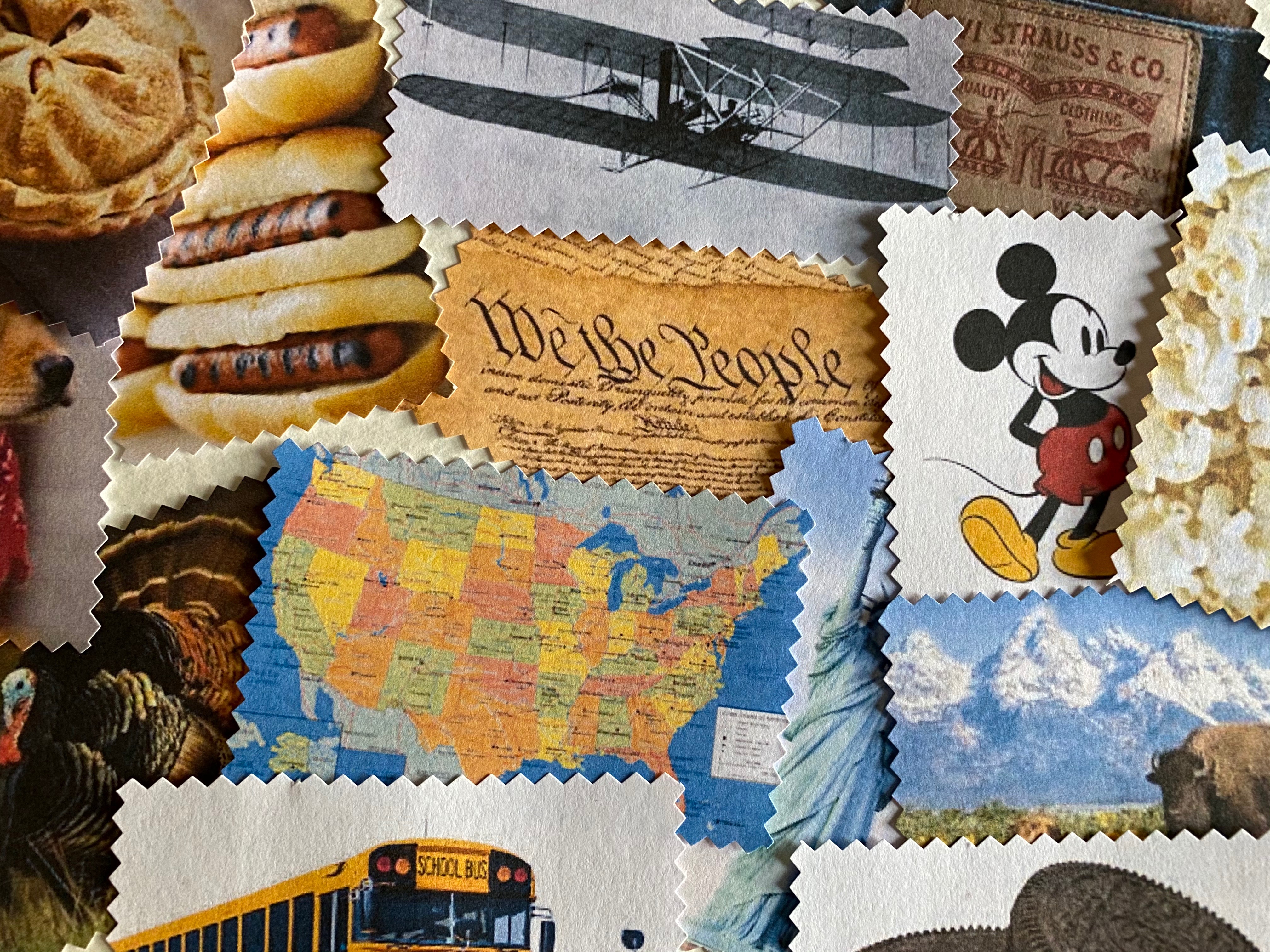
Le Fictitious Local Diner

The Fireproof Safe

safe third

Prologue-
Q: Did my son know what a safe was?
Q: Did my son know what “fireproof” meant?
Those resolved, Q: If my son owned a factory that produced fireproof safes, how would he mark the occasion of the sale of the 20,000th safe?  (Wait, what?)  Would he do what the Wertheim Company of Vienna did in 1869?
The story – I estimate that my son and I have listened to Joseph Strauss’s “Feuerfest Polka” about 240 times.  It is fast-moving, happy, accented with the pinging of a hammer on an anvil, and comes with an adorable story – the polka was commissioned in 1869 by Franz von Wertheim, whose firm produced fireproof safes (feuerfest means fireproof in German).  The music was in celebration of Wertheim’s 20,000th safe! My son and I spent time imagining a company today commissioning a polka for the 20,000th production of anything.  This is SO GOLD.
“Feuerfest Polka”: the story continues – Because of the hammer/anvil pinging, we’ve been referring to Strauss’s piece as the “Blacksmith Polka” for years.  But last week it occurred to me that my son might not know what a blacksmith was.  Did he?  No.  Oh, dear.  Time to find out about blacksmithing.  We chose “History of the Blacksmith in Photographs” by Bryan Crawmer, and “The Backyard Blacksmith” by Lorelei Sims.  Both exceptionally helpful.  To conclude this unit I read aloud (the quite lengthy), “The Village Blacksmith” by Longfellow.

blacksmith books

Epilogue – Because of a very short piece of music, my son now knows about blacksmithing and fireproof safes.  AND BTW, The Wertheim Company is still making safes.

All is calm – We have just finished “The Prairie Builders” a superb book by Sneed B. Collard III, for which he received the American Association for Advancement of Science Award in 2006.  It chronicles the reconstruction of an 8,000+ acre tall grass prairie in Iowa, beginning in 1992 – the site preparation, the reintroduction of native seeds, bison, elk, butterflies. The pureness, calmness of both endeavor and writing reminds us of “The Ox-Cart Man” (Donald Hall/ Barbara Cooney, Caldecott Medal 1980).  Both soothing reads make us appreciate focused, honest work.

“How Trains Work” – a comprehensive, high energy, vibrantly illustrated Lonely Planet Kids Book. Our two favorite takeaways:
– We found out exactly how a funicular works.  We have known about funiculars, but did not have a grasp on the mechanics. (See blog post of November 22, 2014, “Mounting Interest”) (the post is one of my faves)
– We were reading about suspension railways (sort of like an upside-down monorail) and came across this SHOCKINGLY AWFUL YET HILARIOUS account: in 1950, for an ill-thought-out circus publicity stunt, an elephant named Tuffi was traveling on a suspension railway in Germany.  She FREAKED OUT and jumped out of the train (40 feet above ground). LUCKILY she landed in a river and was rescued. Well! This certainly speaks to the sturdiness of that particular suspension railroad.

Reading for great pleasure – We have just started Richard Peck’s book of short stories, “Past Perfect, Present Tense” and it is so A+.  The introduction, an essay on the short story genre, should be required reading. Two points stuck with us –
(semi-direct quote)  “Stories present the metaphor of change, to prepare the readers for changes coming in their lives.  NON-READERS WILL NEVER BE READY” (I added the caps)
(semi-direct quote)  “A short story isn’t easier to write than a novel.  It has less time to plead its case.”
Last night we read the first story in the collection, “Priscilla and the Wimps”, AND LOVED IT.  In the span of 4 pages, the best short story we have ever read.  First of all, THE TITLE.  Second of all, SWEET JUSTICE! Oh my gosh, the ending!  This is re-read worthy.

Story Problem – Le Fictitious Local Diner has an app! (not really)(for story problem purposes only) – And what’s on the app?  Videos of cooking demonstrations from local celebrity/diner chef Jeanette.  The diner is paying Chef Jeanette $50 for each uploaded video and $1 for every view.  Views so far:
– “Bake your own Potato Chips with Chef Jeanette”:  20 views
– “Diner Cherry Pie with Chef Jeanette”:  15 views
– “Diner Healthy Diet Plate with Chef Jeanette”:  0 views
– “Hot Dogs in Pastry Dough with Chef Jeanette”:  25 views
– “Let’s Make Salmon Treats for your Cat with Chef Jeanette”:  500 views
At this point, how much does the diner owe Chef Jeanette?
A) $250    B) $560    C) $810    D) $1,000 (answer at bottom of post)

From our classical music time –
To honor short stories:  the very shortest piece on our iPod – Glenn Gould’s lightning fast interpretation of Bach’s Invention No. 13 in A minor (composed in the early 1700’s).  Usually this piece takes just over a minute, Gould has shaved off 15 seconds –

To honor the Regal Fritillary butterfly, reintroduced to the prairie project:  a composition for piano and two flutes, “Deux Papillons” (Two Butterflies) by Emil Kronke, composed in 1739.  Spritely performance in gorgeous cathedral setting –

And of course, to honor Franz von Wertheim’s 20,000th fireproof safe, Josef Strauss’s “Feuerfest Polka”:  this performance is pretty cute, with conductor and “local blacksmith” fighting for control of the orchestra –

Welcome to the best part of my day!
– Jane BH
(Story problem answer: C). $810)

In a Happy Place

flags nordic

If you’re happy and you know it (you must be living in one of the Nordic countries) We wanted to learn a bit about Finland, Norway, Sweden, Denmark, and Iceland when we read through the 2019 survey which ranked these Nordic countries the happiest in the world.  (FYI:  the USA placed 19th out of 156 – not too shabby)

We are using multiple resources, our globe is out, and here’s what has caught our attention: 

  • there are 30 active volcanos on Iceland
  • the only Finnish word in the American language is “sauna”
  • male AND female reindeer have antlers, and their wonky antlers are NOT symmetrical (vocab)
  • we know where to find 5 versions of the Nordic cross (all 5 countries use the Nordic cross on their national flag)
  • the Danish alphabet has three letters not found in the English alphabet
  • in 2019, the Helsinki, Finland public library was awarded Best Public Library in the World!

For those working toward a PhD in Herpetology – “Lizards” by Sneed B. Collard III is probably not the book.  For the rest of us, it IS the book:  organized, written in a casual voice, funny, funny, funny and filled with opinions, pretty good photos, and easy to grasp facts.  I tested my son on his lizard info comprehension by having him take THE LIZ QUIZ.  (A+, of course)(yay!)

Story Problems! 

From Le Fictitious Local Diner –  January is not only CHICKEN POT PIE MONTH at the diner, it is FREE IN-TOWN DELIVERY FOR CHICKEN POT PIES MONTH. Sales are skyrocketing.  Typically, the diner sells 50 pot pies a week.  But during free-delivery month, the diner has been selling 150 weekly.  Each pot pie costs $3 to produce and sells for $8.  How much more per week does the diner PROFIT in chicken pot pies during the free delivery month?
A)  $150     B)  $300     C)  $500     D)  $800  (answer at bottom of post)

From Farmer Brown’s ranch – Every January, Farmer Brown provides each of his 5 farm hands with 2 new pair of fleece lined jeans (at $50 each, including tax) and a heavy-duty waterproof jacket (at $90 each, including tax).  Was Farmer Brown able to spend less than $1,000 for the purchases this year? (answer at bottom of post)

Zigzagging from our solar system to  woodcut prints to Claude Debussy –

planetarium

– It started with “Planetarium”, Raman Prinja’s dazzling book of planets, galaxies, dark matter, etc.  My son and I have read through several excellent outer space books, so we are on the lookout for anything new:  “Planetarium” did not disappoint –   we have now been introduced to THE OORT CLOUD.  But the real story for us:  the imaginative and superbly crafted woodcut print illustrations by Chris Wormell.

– We are now in WOODCUT PRINT APPRECIATION mode:  we are re-reading “The Old Man Mad about Drawing”, about the great Japanese woodcut print master, Hokusai.  We are also working through “Making Woodblock Prints” by Chesterman and Nelson, to understand the skills and tools involved.

– THEN, while listening to the radio show, “Exploring Music with Bill McLaughlin” we learned that Claude Debussy was so intrigued by woodcut prints that he requested that Hokusai’s famed “The Great Wave” be used on the cover of his La Mer sheet music.

Our classical music selections – the focus had to be on Claude Debussy.  As polished and deeply moving as the music is, we do not often select Debussy pieces for our nightly STUDIES AND STORIES conclusion as we are usually looking for something jollier.  However, three pieces that we are familiar with (and like) – 

  • Jeux de Vagues – movement 2 from Debussy’s 1905 orchestral composition, La Mer.  My son and I envision being plopped in the middle of an ocean where the music has no beginning nor end.  That is what we hear in this intuitive piece:

  • Prelude to the Afternoon of a Faun – this 10+ minute symphonic poem, composed in 1894, is considered to be the beginning of modern music.  Here is what we think:  that flute player, who opens the piece is under ENORMOUS pressure:

  • Clair de Lune – the beloved movement 3 from Debussy’s Suite Bergamasque (for piano), of 1905.  

Welcome to the best part of my day!
– Jane BH
(story problem answers:  Diner – C.  $500, Farmer Brown – Yes)

“D”s Dominated

duncan 2

First, DUNCAN DORFMAN – Meg Wolitzer’s engaging, “The Fingertips of Duncan Dorfman” transported us into the world of competitive Scrabble.  A member of our family plays competitive chess (a US Chess Federation “National Master” – we are kind of proud), so my son is familiar with the concept of board game competition.  The book mentions scrabble tiles and racks over and over, so I brought some tiles and racks for my son to see, touch, try out (regretfully, NO interest).  My son actually does like filling out book reports, and I was happy to see that he picked up on the main themes of this well structured book (ethics, friendship, the roller-coaster emotions of competition).  

doolittle illustration

Then, DR. DOOLITTLE – My son and I are nearly through Hugh Lofting’s timeless adventure, “The Voyages of Dr. Doolittle”.  Here is what we think:  the pleasures of reading this book double when it is read out loud, allowing reader and listener to savor the poetic preposterousness of Lofting’s relentless imagination – delicious names and places like Popsipetel, Bag-Jagderag, Jip, Dab-Dab, Wiff-Waff, Don Ricky-Ticky.  One more thing – the copy we are reading (a 2012 printing) includes spectacular vintage-style illustrations by Scott McKowen.

indian contributions book

Then, DUCK DECOYS – “Encyclopedia of American Indian Contributions to the World”, complied by Emory Sea Keoke and Kay Marie Porterfield – a well edited resource we looked forward to opening every night.  A better mom would have read aloud every single entry, but alas, my son had to settle for learning about one topic from each letter of the alphabet.  Adobe, balls, canoes, duck decoys, earache treatments (well, that was gross), fringed clothing, gourds, hominy (I really built this one up with the hope of my son giving hominy a try – GIANT CORN ARE YOU KIDDING????  Who wants to sample some WAY FUN GIANT CORN??? Alas, no luck.  I have no influence.), igloos, jicama, kayaks, lacrosse, maple syrup, nasturtiums, observatories, popcorn, quipus, rafts, salsa, tipis, umbrellas, vanilla, wampum, yams (we skipped X and Z).  

lattice pie

Then, DESSERTS AT THE DINER (a story problem)During summer months, Miss Michelle (famed pastry chef at the diner) bakes pies every morning:  4 apple pies, 2 apricot lattice (vocab) pies, 2 peach pies, 2 cherry lattice pies, 1 blueberry pie, 1 blackberry pie, 1 rhubarb pie, and 2 lemon meringue pies.  Each pie gets sliced into 6 servings.  

  • If a tour bus with 80 passengers stops at the diner for lunch, would all passengers be able to enjoy a serving of pie?
  • How many pie crusts does famed pastry chef, Miss Michelle, roll out every week?
  • It takes 1 hour to bake a pie.  The diner has 3 ovens and each oven can accommodate 4 pies at a time.  How many hours does famed pastry chef, Miss Michelle, need to bake every pie? (answers at bottom of post)

dvorak portrait

Finally, DVOŘÁK DAZZLED –  on the classical music front, it was Antonín Dvořák week at the STORIES AND STUDIES CENTER (my son’s bedroom):

  • Slavonic Dance No. 1 in C major, composed around 1880.  This is one of our favorites and it gets the performance it deserves by the Vienna Philharmonic.  Side notes:  1)  As per usual, conductor Seiji Ozawa’s hair is too wild to be ignored – we should all be so confident.  2)  If you look closely, you will actually see a woman in the orchestra (back row,  violin section).  This video footage was posted in 2008 (so I don’t know when it was filmed) and I am sure the orchestra is trying to be more with the times, BUT REALLY.

  • Humoresque No. 7, composed in 1894 – we love the way YoYo Ma, Itzhak Perlman, and conductor Ozawa transform this carefree little piece into a heartbreaker.

  • Song to the Moon, from the opera, “Rusalka”, premier performance in 1901.  Soprano Susan Karinski and the US Navy Band deliver an exquisite performance.  ATTENTION EVERYBODY:  Susan Karinski.  Whoa.  

Welcome to the best part of my day!
– Jane BH
(story problem answers:  yes, 105 pie crusts, 2 hours)

1809: What Went So Right

1809:  Brilliant Work, Moms! 

lincoln    darwin    mendelssohn    poe

Abraham Lincoln, born February 12, 1809
Charles Darwin, born February 12, 1809
Felix Mendelssohn, born February 3, 1809
Edgar Allan Poe, born January 19, 1809

We are currently studying:
Louis Braille, born January 4, 1809

braille bio

My son and I decided to learn about Louis Braille (1809 – 1852) and we struck gold with the extraordinarily well researched book, “Louis Braille – A Touch of Genius”, by C. Michael Mellor.  Almost scrapbook in style and continually captivating: 

  • photographs, vintage illustrations, postage stamps, transcribed letters, sidebars of historical significance, examples of reading systems for the visually impaired
  • Louis Braille’s family and the tragic mishap that left him blind at age 3
  • comprehensive information about the Institute for the Blind in Paris, France – the only school for the blind in all of Europe at the time – where Louis was enrolled at age 10  
    • innovations/controversies of each headmaster 
    • school curriculum – education, job training, and music.  We learned that in addition to being an outstanding student, Louis was a prize winning cello player and also earned a side income by playing the organ   
  • Louis Braille’s contributions:
    • the raised 6-dot cell code (at age 15)(!!!) that is now, worldwide, called “braille”
    • a device that allowed for written communication between the visually impaired and the sighted (the first dot-matrix printer) 
    • a raised dot system for reading music 

Louis Braille passed away at age 43 of tuberculosis.  We finished the book heartened and heartbroken.

More talk about Louis Braille – When I texted superb educator, Jill R.A., that my son and I were in the midst of a study unit on Louis Braille, she texted back:

Oh! I love that! Louis Braille is a hero of mine so I tell everybody about him!  My title is Teacher of the Visually Impaired (TVI).  I am an itinerant (good vocab word) teacher which means I travel to wherever blind and visually impaired students are, which may be at home, day care, or schools.  Some TVI’s teach in a classroom at a blind school,  but I see students that attend public schools and are attending general ed classes.  I also work with students from birth up to age 21. I generally consult with teachers and help them understand how to best teach the student who is visually Impaired.  However,  I have braille students who I meet with at least 3 times a week for braille lessons. I even have a few babies who will be braille readers and I meet with them and their parents for pre-braille activities to get their little fingers ready and sensitive to feel the dots.  We will play in rice and beans and pick out different things.   We also start “looking” at books really early so that they know to feel for the dots. It’s a fantastic job!”

Look at the variety of braille learning tools that  Jill R.A. sent to augment our unit (I told you she was superb):

braille tools

Poe Poems – my son and I explored two lengthy poems by 1809 birthday boy, Edgar Allan Poe:  his  happiness-to-misery blueprint in “The Bells” (1849) and the tortured loneliness pervasive in “The Raven” (1845).  So gorgeously composed, each word so fastidiously selected, but YIKES.

beatnik style

Poetry Night at Le Fictitious Local Diner – The diner recently hosted a 1950’s “Beatnik” style poetry reading night.  Patrons were encouraged to  dress beatnik style (cool, man, cool) and arrive ready to recite a poem.  There were prizes for the best and worst outfits, best and worst poems, and best and worst poem delivery.  Well!  The diner was overwhelmed by the turn out!  150 people showed up and 80% were in costume, and 20% were brave enough to recite a poem.

1- How many patrons arrived in costume?
a).  16     b).  80     c).  100     d).  120

2- How many patrons recited a poem?
a).  20     b).  30     c).  50     d).  75

3- What percentage of the entire attending crowd received a prize?
a).  4%     b).  6%     c).  20%     d).  50%

4- Should poetry night be an annual event at the diner? (answers at bottom of post)

Mendelssohn Music – we celebrated another 1809 birthday boy (this one with a brighter point of view than Poe) by listening to three of our favorite pieces by Felix Mendelssohn – 

  • Overture to Midsummer Night’s Dream, composed 1826.  So very clever.  An excellent performance by the Leipzig Gewandhaus Orchestra (where Mendelssohn served as a very beloved Music Director from 1835 – 1847):

  • Symphony No. 4 (“The Italian”), movement 1, composed in 1833.  Happy, breezy.  A glossy smooth performance under the baton of Metropolitan Orchestra (Sydney, Australia) conductor, Sarah-Grace Williams:

  • Violin Concerto in E minor, finale, composed 1844.  This is the movement that my son and I call “the cat and mouse movement”….lots of brisk “advance/retreat”.  This is an old recording, but we are mesmerized by the precision that Itzhak Perlman brings to this performance:

Welcome to the best part of my day!
– Jane BH
(story problem answers:  1) d.  120,  2) b. 30,  3)  a. 4%,  4)  Yes, of course!)

Dear Librarians

newbery award        caldecott award

Pick us!  Pick us!  We are ready to serve!  We’ve just been reading about the Association for Library Service to Children, which annually recognizes book and video excellence with ten different medals and awards.  Would my son and I love find ourselves on any of the award selection committees?  YES!  Pick us!  Pick us!  Once we settled down from our committee responsibilities fantasy, we narrowed our focus to learn everything about two of the ten awards: the Newbery Medal (literature) and the Caldecott Medal (book illustration):

– The Newbery Medal – we read “Balderdash” (Michelle Markel/Nancy Carpenter).  A snappy,  brief look at the life of publisher John Newbery.  Inspired by philosopher John Locke’s quote, “Reading should be a treat for children”, Newbery enjoyed enormous success by printing books that children WANTED to read (prior to this, most reading material for children was designed to put the fear of the afterlife into the reader’s behavior).  The first Newbery Medal was awarded in 1922.  We read through the list of Newbery Medal and Honor Book award winners and notated those books we had read:

  • 2016 – The War that Saved My Life – Important
  • 2013 – The One and Only Ivan – Liked
  • 2011 – Turtle in Paradise – Really liked
  • 2008 – The Wednesday Wars – Really liked
  • 2007 – Penny from Heaven – Really liked
  • 2003 – Hoot – Satisfying
  • 2003 – Surviving the Applewhites – Oh how we LOVE this book, have read 4 times
  • 2002 – Everything on a Waffle – Liked
  • 2001 – A Year Down Yonder – Really liked
  • 2001 – Because of Winn Dixie – Liked
  • 2001 – Hope was Here – Really liked
  • 1999 – A Long Way from Chicago – Really liked
  • 1999 – Holes – Important
  • 1991 – Maniac Magee – Liked
  • 1988 – Hatchet – we’ve read this 3 times
  • 1984 – The Sign of the Beaver – we are currently reading this, like it a LOT
  • 1978 – Ramona and Her Father – Liked
  • 1973 – Frog and Toad Together – Really?
  • 1963 – A Wrinkle in Time – Really liked
  • 1961 – The Cricket in Times Square – Liked
  • 1953 – Charlotte’s Web – The best
  • 1952 – Ginger Pye – Liked
  • 1939 – Mr. Popper’s Penguins – Liked
  • 1923 – The Voyages of Dr. Doolittle – we are currently reading this, LOVE this book

24 down, 74 to go – Question for my son:  shall we read every Newbery Medalist?  YES!  Why not, what else are we doing?  The challenge begins.

– The Caldecott Medal – we read “Randolph Caldecott – The Man Who Could Not Stop Drawing” (Leonard S. Marcus) – a most comprehensive biography, filled with Caldecott’s charming, skillful, intuitive drawings.  This book provoked us to order “Old Christmas:  Sketch Book of Washington Irving” (1876) with illustrations by Randolph Caldecott (we are saving this for December reading).  The Association for Library Services to Children began awarding the Caldecott Medal in 1937.

french fries    milkshakes    french fries

Story problem from the local diner – Miss Jeanette (the new diner manager) has an idea to spark positive PR (vocab) for the diner!  She is proposing that for the upcoming summer months, the diner  award “Shake and Fries” vouchers (vocab) to high school students who volunteer during story-time at the local library.  Miss Jeanette is projecting that 50 coupons will be awarded over the summer.  If a “Shake and Fries” voucher costs the diner $3, how much how much will the diner potentially spend supporting the story-time literacy event? 
A.)  $35     B.)  $53     C.)  $150     D.)  $350

Lactose intolerant students earning vouchers can substitute lemonade for the milkshake, and (happy day) the cost for the diner will be reduced by 20%.  If 10% of the students opt for the lemonade, what is the total projected cost of the diners’ voucher program?
A.)  $20     B.)  $45     C.)  $147     D.)  $235 (answers at bottom of post)

A Serendipitous Pairing – Two A+ books that we just happened to be reading at the same time, that SHOULD be read at the same time:

“My Life with the Chimpanzees”, an autobiography (vocab) by Jane Goodall
and
“The Voyages of Dr. Doolittle”, by Hugh Lofting

My son and I were about three chapters into the Dr. Doolittle book (and just loving it) (meaning that my son has a difficult time letting me shut the book at the end of each night’s reading) when we started the Jane Goodall book.  And then, WHAT A SURPRISE!  Jane Goodall mentions several times in her autobiography the impact the Dr. Doolittle books had in shaping her future.   My son and I love thinking that maybe Hugh Lofting (1886 – 1947) might know how much good work his books inspired.

Dr. Doolittle inspires our classical music selections – Right there, in chapter 6, Dr. Doolittle entertains the Stubbins family with his flute playing!  What doesn’t that man know how to do? The book states that the visit took place in 1839, so my son and I put together a little flute recital program, selecting flute pieces that were composed prior to 1839 – pieces that Dr. Doolittle actually could have played – 

  • Francois-Joseph Gossec’s “Tambourin for flute and orchestra”, composed in the early 1790’s.  This is just so darn sweet.  Play, Dr. Doolittle, play!

  • “Badinerie” from Bach’s Orchestral Suite No. 2, 1739.  We learned that a badinerie is a brief and lively dance.  We are not sure that anybody could play this piece with greater accuracy and speed than Sir James Galway (except, of course, Dr. Doolittle) –

  • Beethoven’s spritely “Trio for 3 Flutes in G major”, movement III.  The story goes that this piece was composed in 1786 when Beethoven was fifteen.  Whoa.  Vivacious and brisk – the perfect conclusion for our Dr. Doolittle mini concert –  

Welcome to the best part of my day!
– Jane BH
(Story problem answers:  C.)  $150 and C.)  $147)

Not on my watch

Last Tuesday, I was lunching at a neighborhood cafe and felt a magnetic pull to eavesdrop on the two teenagers a few tables down who had obviously cut class.  The theme of their distressing conversation was “I hate school”.  Oh my.  Who or what stomped the life out of their learning adventure?  

grandma watch

Not on my watch.  Every single night it is my pleasure to make sure that the learning adventure for my son (AND myself) is set on FULL BLAST.  One goal is to read something so startling that we stop, reread, and marvel.  A few items that had us marveling this past week:

national parks better

  • From “The Wondrous Workings of Planet Earth”, by Rachel Ignotofsky:
    • the one place on earth, that by 1959 international treaty, can only be used for peace and science (with all discoveries shared freely).  Nice.  (Antarctica)
    • while many ecosystems are under threat from unsustainable farming techniques, deforestation, and global warming, the Mongolian Steppe has quite another problem:  GOATS.  One of Mongolia’s successful exports is the fiber from cashmere goats,  so there are a LOT of goats grazing with a vengeance, munching roots as well as the grass,  destroying entire landscapes.
    • the Gouldian finch of the Australian savanna.  Crazy GORGEOUS (see photo below in the music listening section).
  • From the Lonely Planet Kids book, “America’s National Parks”:
    • which state, after California and Alaska, boasts the greatest number of national parks?  (Utah).  We never would have guessed that.
    • there are national parks that exist primarily underwater:  American Samoa National Park, Biscayne National Park, Channel Islands National Park, Dry Tortugas National Park, Kenai Fjords National Park, and Everglades National Park.

tide pool 3 tries

More interesting information on the horizon  We have just started the terribly elegant little “Pacific Coast Tide Pools” by Marni Fylling.  So far we have become knowledgeable about low tides, high tides, the splash zone, the challenges of being permanently attached to a rock, and the toxic beauty of sea anemones.  Sponges are on deck.

trivia sign

Story problem:  Trivia Night at Le Fictitious Local Diner – Tuesday nights are slow at the diner, so the new manager, Miss Jeanette, is hosting “Tuesday Twilight Trivia” to bring in more customers.  Admission is the purchase of the “Tuesday Twilight Trivia Dinner Special” for $7.50.  If the first Tuesday there were 20 players and the second Tuesday there were 40 players, by what percentage did the the attendance rise?  
A)   20%      B)  40%       C)    50%     D)  100%

If the diner awards a cash prize of $25 to each evening’s winner, how much did the diner gross on night number two?
A)  $150     B)  $275     C)  $400     D)  $1,000
(answers at bottom of post)

finches

Music to celebrate that ridiculous-yet-gorgeous Gouldian finch –

  • Vivaldi’s “Flute Concerto in D major” (known as “The Goldfinch”), movement 3, published in 1728.  Yay, James Galway –

  • “Dawn” from Ravel’s ballet, “Daphnis and Chloe”, which premiered in 1912.  A superb, compact performance by the Berlin Phil, complete with chorus.  We put our full attention to listening for the subtle birdsong theme that runs in the background throughout the piece –

and finally:

tie dyed hippie    finch singular

  • “Green Tambourine” by the Lemon Pipers.  The psychedelic colorwork that is the Gouldian finch simply begged for a vintage song from the psychedelic 1960’s.  How can we not smile when we listen to this?  GREAT rhythm.  Peace out –

(for more ’60’s vibe:  the April 29, 2015 post, “Peace, Love, and Tambourines”)

Welcome to the best part of my day!
– Jane BH
(story problem answers:  D)  100%  and  B)  $275)

Referencing Robert Burns

On the grounds that my son has enough to deal with – I do my best to keep themes of MAN’S INHUMANITY TO MAN* removed from our stories and studies.  However, last night three of our books ambushed us with the ugliness of RACISM:

three books 

  • From Kelly Yang’s novel, “Front Desk”:  racism and racial profiling
  • From Rachel Ignotofsky’s “Women in Science”:  we hated learning that brilliant ophthalmologist/inventor Patricia Bath contended with racism throughout her academic career
  • From Kekla Magoon’s novel, “The Season of Styx Malone”:  we are pretty sure that the reluctance of our protagonists’ father to allow his children to venture into the big city is based upon a past trauma rooted in racism

I provided my son with a concise explanation of racism, and followed up with some questions:

  • does it seem smart or ridiculous to assign specific characteristics to an entire group of people based on appearance?
  • do we need to make others look bad to make ourselves feel good?
  • is racism ever acceptable?
  • what letter grade would we give racism?

robert burns

*“Man’s inhumanity to man” – the phrase was first used by Scottish treasure, Robert Burns, in his lengthy poem of 1784, “Man was made to mourn:  A Dirge”.  We carefully examined each line of this stanza (vocab):

Many and sharp the numerous ills
Inwoven with our frame!
More pointed still we make ourselves
Regret, remorse, and shame!
And man, whose heav’n-erected face
The smiles of love adorn, –
Man’s inhumanity to man
Makes countless thousands mourn!

natural attraction book

Why can’t we be friends? – My son and I are reading from Iris Gottlieb’s cutie of a book “Natural Attraction”, which is filled with examples of unexpected and beneficial partnerships in nature:  tarantulas/frogs, ants/aphids, whales/barnacles.  (New vocab:  symbiotic and mutualism.)  This book offers an uplifting way to conclude each night’s academic agenda.

scot lion

Story problem from Le Fictitious Local Diner – to bring attention to Robert Burns’ 260th birthday, the diner owner was thinking about adding “A Taste of Old Scotland” onto the dinner menu, but there proved to be no interest among the chefs in preparing haggis, so as sort of a second choice, butterscotch sundaes were added onto the dessert menu as a watered down nod to the great poet’s homeland.  I know, so lame.  Over the course of the first month on the menu, 500 butterscotch sundaes were served up, 80% to teenagers.  How many non-teenagers enjoyed a butterscotch sundae during this time?  (answer at bottom of post)

red rose

Music to celebrate Robert Burns – we listened to the well known Burns song, “Oh, My Love is Like a Red, Red Rose”, and then selected two pieces that idealize his native Scotland –

  • “Oh, My Love is Like a Red, Red Rose”, lyrics by Robert Burns (1794) set to a traditional Scots folk melody.  This is a lovely rendition, but BTW, there is the most adorable performance in the 1999 movie, “My Life So Far” –

  • Max Bruch’s “Scottish Fantasy”, movement 4 (selected because the dominant melodic theme is based upon a Burns song, “Scots Wha Hae”), composed in 1880.  Interesting note:  Max Bruch’s first visit to Scotland was one year AFTER the premiere of his “Fantasy”.  Another interesting note:  this youtube video indicates that we are listening to movement 5, but we are not.  This is fake news;  there is no movement 5.  This is a clerical error. –

  • Felix Mendelssohn’s Symphony No. 3 in A minor (known as “The Scottish”), movement 2, composed in 1842, as he reflected upon his 1829 sojourn to Scotland.  The short movement is full of bounce and spirit and this performance is conducted by Gustavo Dudamel.  Winner, winner! –

Welcome to the best part of my day!
– Jane BH
(story problem answer:  100 non-teenagers)

…and in conclusion

– Farewell 2018 – 

Books that made the biggest impact with my son this past year –

books best 18

  • “The Erie Canal” by Martha E. Kendall  (surprisingly interesting)
  • “The Violin Maker” by John Marchese  (surprisingly interesting)
  • “The Cities Book”, a Lonely Planet book  (the lengthiest book we’ve ever tackled, but worthy of our perseverance)
  • “The War that Saved by Life” by Kimberly Brubaker Bradley  (we learned so much about the daily struggles of British civilians during WWII)
  • “The Right Word (Roget and his Thesaurus)” by Jennifer Bryant and Melissa Sweet  (the most beautifully illustrated book we read this past year)

What we are reading now – 

space book

“Ken Jennings’ Junior Genius Guide to Dinosaurs” – well researched, cleverly organized, hilarious.  And now we know:

  • the complexity of dealing with dinosaur fossils (which we learned have been found on EVERY continent)
  • the main types of dinosaur skeletal structure (lizard hipped and bird hipped)
  • dinosaur IQ (really, really low.  really low)
  • how dinosaurs became extinct (FREAKY HEARTBREAKER)
  • to mull on:  dinosaurs lived on the earth for 150 MILLION YEARS (becoming extinct 65 million years ago), yet the first dinosaur bone was not officially recognized and identified until 1824.  So, it is interesting to consider that (for example) our USA founding fathers had no idea that their world was once anything other than as they experienced it.

“Professor Astro Cat’s SPACE ROCKETS” by Dr. Dominic Walliman and Ben Newman.  My son and I like to keep abreast of current outer space exploration – astronauts, telescopes, space probes – but we have never considered how astronauts, telescopes, space probes actually get into outer space.  This book has the answers  (and who can’t be fascinated by the engineering genius of space rockets?  And we keep laughing about the very first earthly inhabitants to journey by rocket to outer space (FRUIT FLIES) (we actually want more info about the fruit flies – how many did they send?  did they reproduce?  how many came back alive?).  The book’s content is really pared down, but the information comes across clearly (and we haven’t gotten this information anywhere else), so KUDOS Walliman and Newman ONCE AGAIN).  

BTW – the books of Ken Jennings and Walliman/Newman always make a big impact with my son.

dog santa hat

Story Problem – Early in December, Le Fictitious Local Diner cordoned off their parking lot and hosted a Holiday Pet Parade, complete with diner-made treats baked for all participants and a photographer to commemorate the event.  50 families each brought a pet dressed in holiday finery.

  • If 80% brought a dog wearing a Santa hat, how many dogs in Santa hats were in the parade?
  • If one family brought a turtle wearing teeny reindeer antlers, the turtle was what percentage of the parade?  
  • If 8 families brought cats wearing doll sweaters, what percentage of the parade was causing a snarling uproar? 
  • If there were exactly 50 pets in the parade, and the pets were either dogs, cats, turtles or birds, how many parakeets in cages with twinkly lights were in the festive procession? (answers at bottom of post)

Sweet Endings (actually, SUITE endings) – last night’s classical music listening:

My son and I always enjoy a piece of classical music that takes us by surprise with a non-traditional ending –  such as Elgar’s “The Wild Bears”, Smetana’s “The Moldau”, and John Williams’ “The Imperial March”.  To bring 2018 to a sweet ending we chose compositions with quirky conclusions from three different suites:

  • The Dove, from Ottorino Respighi’s orchestral suite, “The Birds” (1828).  A somber, reflective piece with a most delicious, elegant swirl of an ending:

  • Mercury, from Gustav Holst’s suite, “The Planets” (1916).  Mercury, the Messenger God, zooms erratically all over the universe and at the end of the short piece, quietly fades away with an utter lack of fanfare:

  • On the Trail, from Ferde Grofé’s “Grand Canyon Suite” (1931).  We found an excellent recording from the NY Philharmonic that accompanies an engaging video featuring the Grand Canyon MULES.  But back to the music –  the abrupt ending is perfection:

Welcome to the best part of my day!
– Jane BH
Story problem answers:  40 dogs, 2%, 16%, 1 parakeet

Caw Caw Caw

Bird Watching –  There were only about 500 crows cawing their heads off in one of our trees last week, and what did my son and I know about these screeching black beauties?  Not one thing.  The remedy:  Pamela S. Turner’s book, “Crow Smarts – Inside the Brain of the World’s Brightest Bird” (and HEY! we’ve already learned something from the book title).  Written in casual conversational style, Turner’s readers join a field study on the island of New Caledonia to observe these terrifically astute birds.  So far, the focus for judging crow intelligence is TOOL USE.  So far, the crows are using tools (leaf stems) to “fish” for grubs (beetle larvae) nestled in an old log (and I am once again gagging for the cause of scholarship).

“How Animals Build” A mere sampling of what’s captured our attention from this Lonely Planet Kids book: 

  • on the home front – a few days ago my son and I spotted a rabbit hopping about our backyard.  Thanks to “How Animals Build” we knew this might mean that UNDER our very trees and ivy and general chaos, there could be a RABBIT WARREN – a whole city of activity, complex travel patterns, escape hatches, and HQ for 20 rabbits.  (Since we’ve only seen one rabbit, maybe the warren is under a neighbor’s backyard).  We’re keeping our eyes open.
  • nine thousand miles away (and I am not sorry about this)Termitariums (termite mounds) –  found throughout the African savanna, these massive architectural marvels are constructed by those teeny insects.  Termites must be busy as bees, but where bees have three different work ranks (queen, worker, and drone), termites have SEVEN work ranks that comprise their productive team (oh, the information we are accumulating from “How Animals Build”).  My son and I paused to consider whether we would be interested in being a scientist who studies termites.

Maybe our academic achievement of the year –  OH MY GOSH, we finally finished “The Iliad”.  In our concluding conversation (meaning me talking on and on and my son letting me talk on and on) we agreed that one reason “The Iliad” makes for superior reading is Homer’s surprising fairness in presenting bad and good about both Greeks and Trojans.  First we root for the Greeks, then we root for the Trojans, then the Greeks, the the Trojans – up to the epilogue (vocab) we didn’t know which side Homer favored.  What a long, but instructive read.

tom gates iliad

Antidote for “The Iliad” – After reading about fatal wounds, hatred, sorrow, revenge, and blood thirsty battle after battle after battle, it is a relief to have our attention captured by an old friend (Tom Gates of Liz Pichon’s series) who’s preoccupied with figuring out how to stockpile caramel cookies and avoid doing homework.  We are smiling our way through “Family, Friends, and Furry Creatures”.  

The Cranberry Sauce Story Problem   Early in November, Le Fictitious Local Diner hosted a FREE cranberry sauce class for all local high school students (so they would have SOMETHING to contribute to the holiday meal besides attitude).  180 students showed up to the class.  If each student needed 1 cup of sugar to mix with the cranberries and water, and there are 2.25 cups of sugar to the pound, how many pounds of sugar were needed for the class?  (to be worked without paper and pencil)
A.  80 pounds     B.  180 pounds     C.  225 pounds     D.  360 pounds  (answer at bottom of post)

Classics rather than Classical – the music to bid farewell to November:

  • Scott Joplin’s Maple Leaf Rag of 1899.  My son and I talked about the concept of “royalties”:  for every sheet music copy sold of the super famous Maple Leaf Rag, Joplin earned 1 cent  (apparently this provided a steady if not overwhelming income): 

  • The wildly popular Shine On Harvest Moon written in 1908 by husband and wife team Nora Bayes and Jack Norworth.  Most recorded versions are sung ballad style (which makes me crazy – so dang slow).  So we listened to the full-of-pep vintage 1950’s recording by The Four Aces:

  • The contemplative Thanksgiving by George Winston, composed in 1982.  Perfect for a night’s final listening selection:

Welcome to the best part of my day!
– Jane BH
(story problem answer:  A.  80 pounds of sugar)

Ancient History

Are we Ancient Egypt experts yet?   My son and I are mid-way through another Ken Jennings’ Junior Genius book – this one on “ANCIENT EGYPT”.  Of course, we’ve learned A LOT about pyramids, the Nile River, the 2,000+ gods of ancient Egypt (each with an animal head), sacred bees, bugs, hippos, cats,  but last night was THE BEST:  

BECAUSE WE READ ABOUT EMBALMING RITUALS!!! (which we learned were rather like spa days for the deceased).  Pages and pages of unappetizing-yet-can’t-look-away information about removing organs, packing corpses with salt, and wrapping, wrapping, wrapping.  As a surprise bonus, we learned how to make mummy snacks using a tube of dough and hotdogs (awful/awesome/still laughing).

ALSO:  we now know we do not want to encounter THE EYE OF RA in any dark alleyway.  

Ken Jennings’ books never disappoint.

3,000 years old and still spellbinding – Yay Homer! – The Iliad and The Odyssey are the oldest surviving examples of Greek literature and WE are sitting at the edge of our seats enthralled with stories that have enthralled how many generations before us? (generations – discussion topic)   We’ve finished The Odyssey and we’ve started The Iliad.  Last night was just excellent reading:   a fierce battle between Ajax, representing the Greeks, and Hector, representing the Trojans, resulting in a draw (vocab).  The retelling of these stories by Gillian Cross is superb; the complex, really weird illustrations by Neil Packer are perfection.

It was time for another GENERAL KNOWLEDGE QUIZ (based on ANYTHING we have studied in the past)   My son is enthusiastic and focused whenever I present a quiz – I think he likes chance to reveal his super sharp memory:   

Autumn at the Diner story problem – for the months of October and November, the diner is offering dense, spicy gingerbread cake topped with a thick lemon sauce and whipped cream.  The cake can be ordered by the individual square for $4 – OR – an entire cake may be purchased (for taking home) for $15.  For each month, diner management is projecting to sell 500 squares and 80 cakes.  If the cake is so delicious and in such demand that the sales are double the projections, how much money will the diner have grossed on gingerbread cake sales for the two months?  (answer at bottom of post)

The ancient call to the sea – I have no idea why our nightly book stack always seems to include something that transports us to the high seas.  Must be in the DNA.  Crazy.  This week it is Herman Melville’s Moby-Dick.  We are a few chapters into our abridged version of Moby-Dick – we’ve met Ishmael and Queequeg, and we are liking the pace of the book.  I did compare the abridged version with the Melville’s original, which is way, way, way too wordy for my son.

Controversy on the high seas –  

We foolishly thought all sailor type songs came under the umbrella of “sea shanties”.  WELL.  Whoever wrote the Wikipedia entry on Sea Shanties was firm and unwavering:  

  • A shanty is a work song, to establish rhythm for group tasks that involve HEAVING or HAULING (vocab:  not so much the hauling part, but definitely the heaving part).  
  • A sea song is for the general entertainment of sailors after work is done.  GOT THAT?

Now we had to decide if the following were shanties or sea songs:

Jack’s the Lad” aka “The Sailors’ Hornpipe” – the classic SEA SONG – my son knows it from the Disney cartoon staring Goofy as sailor.  It is documented that Captain Cook ordered his sailors to dance the hornpipe to keep fit:

Heave Away” – obviously a SHANTY, said to be sung by Indian Ocean whalers of the 1840s.  We became familiar with “Heave Away” from the current Broadway show, “Come From Away”.  If ever there were a song that makes you want to sing along, this is it:

The Maid of Amsterdam” aka “A’Roving” – a SEA SONG, said to have been sung as early as 1630.  When I attended UCLA in the mid 1970’s, this song was an enthusiastic staple of the Men’s Glee:

Blow the Man Down” – a well known SHANTY from the 1860’s, used to set the rhythm for hauling:

Welcome to the best part of my day!
– Jane BH
(story problem answer:  $12,800)