Physics

The Spring Academic Banquet

Oooooh!  The Spring Academic Banquet! – actually, we host an academic banquet every night up in my son’s room.  Here is our basic template, gussied up to welcome spring – 

The hors d’oeuvre platter:  this past week, academic thinking mode was activated with mini warm-up exercises, along the line of:
– a word scramble (FLIDAFOD = DAFFODIL)
– iPad keyboard practice (sprout, trout, about, shout, clout, pout, grout)
– practicing: “>”(larger than) and “<“ (smaller than)
– matching:  composer and composition
– tracking the travels of Breton (our favorite shark) on ocearch.org
– ooohing and ahhhing over photos we took to celebrate my son’s 200th volunteer day at the local nursery. 

The main course:  two hearty, satisfying topics: 

The Physics Book, 250 milestones in physics, arranged chronologically by Clifford A. Pickover, published in 2011. Oh my gosh – I never thought we would be reading about physics and bless our hearts, we are pretty much not comprehending most of the entries – AND YET, we are LOVING THIS BOOK!   Each “milestone” gets a two page spread;  one page for an illustration/photograph and one page for historical references and technical, bewildering explanations.  We skip milestones that are too confusing for the likes of us (the majority of milestones) but – oh! – the feeling of elation when we find a topic we can grasp.

The sort of milestones we have skipped:
The Antikythera Mechanism
Coulomb’s Law of Electrostatics
Soliton

The sort of milestones that fill us with wonder:
the physics of the boomerang – dynamite – the hourglass – Ben Franklin’s kite
the acceleration of falling objects – X-rays – the stethoscope
the thermos – neon signs – Schrödinger’s cat (which we are familiar with thanx to BBT)

Here is something cool we learned: The first Nobel Prize (funded by the invention of dynamite, 1866) ever awarded went to Wilhelm Röntgen for his original work with X-rays (1895). 
This is the book we can’t wait to open every night!

– Polar Explorers – for Kids, Maxine Snowden.  We have just completed part one (Arctic explorers), and are geared up to start part 2 (Antarctic explorers).  Our globe and compass are out every night so we can trace routes attempted by the explorers.  We are now REALLY familiar with:
– the concept of the Northwest Passage 
– the contentious race to the North Pole 
– the difference between the geographic North Pole and the magnetic north pole
– our favorite explorer:  Fridtjof Nansen (brilliant, thoughtful, honest, focused) 
– our least favorite explorer:  Robert Peary (apparently a self centered #$%&+*&%$#)

The salad course:  a Farmer Brown story problem involving veggies necessary for perking up a bowl of tossed greens:

– Farmer Brown is teaching a gardening class the first Saturday of every spring month  (March, April, and May).  Students will be given gardening gloves, clay pots, potting soil and will learn how to plant radishes, cucumbers and tomatoes from seeds.  Farmer Brown figures to spend $15 on supplies per student and has priced the course at $25.
– If 15 eager beginner gardeners sign up for each class, how much profit will Farmer Brown realize? 
A)  $10     B)  $150     C)  $375     D)  $450
– How many students will Farmer Brown prepare for if 20% of the radish/cuke/tomato students decide to enroll in his “Let’s Grow Bell Peppers” summer class?
A)  9  students     B)  15 students     C)  20 students     D)  45 students
(answers at bottom of post)

The dessert:  the icing on our spring banquet cake:

We just finished “Grandpa’s Great Escape”, by David Walliams.   A lot of full throttle wackiness (story AND illustrations) in this book: can friendships, bravery, and a special relationship between a grandfather and his grandson triumph over the mean, the greedy, and the cheaters? (Of course they can, but hold onto your hat, cuz we found this book to be a roller coaster ride from start to finish.)  To top it off (icing on the cake), we learned a bit about the pride of Britain’s Royal Air Force of WWII:  the Spitfire!

Classical Music for a Spring Banquet – 

Spring”, from the “Victorian Kitchen Garden Suite”, composed by Paul Reade.  We learned that “The Victorian Kitchen Garden” was a British TV series, produced in 1987 (winning an award for best TV music in 1991).  The short recording we listened to features Emma Johnson (on clarinet), of the original theme soundtrack.  Perfect for spring, with bird song scattered throughout the piece –

Appalachian Spring”, music composed by Aaron Copland for Martha Graham in 1944.  We like the weirdly named “Doppio Movimento” section (yes, we looked this up, we understand what doppio movimento means, but we still think it is a weird name), a respectful interpretation of the Shaker hymn, “Simple Gifts”, accented with with regal fanfare and waves of majestic strength.  We listen for the spring raindrops (or is it the clip clop of horses’ hooves?).  We love this piece –

Spring Song”, composed in 1841 and found in Book 5 of Felix Mendelssohn’s “Songs without Words”.  We wonder whether Herr M would be amused that this piece would feature prominently in loads of cartoons (most notably, “Spring Song” was the central music theme of the 1939 “Daffy Duck and the Dinosaur” animated cartoon short).  Oh, the royalties he missed out on!

Welcome to the best part of my day!
– Jane BH
(story problem answers:  D)  $450 and A)  9 students)

Indian Summer

Summertime studies for the likes of us – 

India, Incredible India, an A+ book by Jasbinder Bilan, content well matched with Nina Chakrabarti’s A+ graphics.  Clever premise:  a young lady, “Thara”, and Nanijee (nanijee – totally great word – translates to maternal grandmother), sort through grandmother’s treasure box, which is filled with souvenirs from every state and territory in India.  Page by page, we learned facts about each area and souvenir, then located the state/territory on the included map.  Every night, my son and I were drawn in by the exuberant illustrations positioned among splashes of vibrant colors.  We would read anything by this team.

While Mrs. Coverlet was Away, by Mary Nash.  I subject my son to this book every August because it is funny, imaginative, and champions the concept of self reliance.  Spoiler alert:  chapter 15 includes such a poetic passage, transporting us on a lazy summer’s day to the town swamp for turtle hunting.  The story gets us ready for our Mary Nash December read (Mrs. Coverlet’s Magicians). 

Nicolaus Copernicus, by Mariana Swift.  Oh, we do like this man (1473-1543) who had the nerve to propose the heliocentric theory.  Big shocker, Copernicus was not in the good graces of the church, but did he shy away from enthusiastically explaining his observations?  NO!  Role model!  Copernicus published his groundbreaking book, “On the Revolutions of the Celestial Spheres”, at age 70.  Role model!

The Travel Book (a Lonely Planet Kids book).  We started this quirky fact book January 1st (with Canada) and finished August 1st (with Kiribati). One page every night, one country every night. (and BTW, I just took an online geography quiz and correctly identified 26 countries out of 30…before this unit I probably could have pinpointed about 9 countries).  Study unit highlights:

Welcome to our “Travel Book” Quirky Awards Ceremony:

Quirky Fashion Accessory Award, Grand Prize Winner:  Lithuania develops a signature perfume “Scent of Lithuania” (2011)
Quirky Global Citizen Award, Grand Prize Winner:  Global Seed Vault – entirely funded by Norway (officially started in 2008)
Quirky Destination Award, Grand Prize Winner:  An underwater post office! (Vanuatu)
Quirky Flag Design Award, tied for Grand Prize Winner :  A completely awesome hat (the symbol of Lesotho’s main ethnic group) is emblazoned on the Lesotho flag


Quirky Flag Design Award, tied for Grand Prize Winner:  Nauru is located just south of the equator and their flag is a model of brilliant simplicity.  See what I mean? 


Quirky Sob Story Category, Grand Prize Winner:  Awww, Nauru.  In the 1980’s, this country experienced a huge economic boom when they were able to sell  phosphate (used in fertilizers) (from scrapings of BIRD POOP).  Alas, they did such a good job of scraping the rocks of the guano, that there was no more phosphate to sell. Economy collapse. Heart breaker.  At least they still have that well designed flag.

A summer school cooking class story problem from the local diner – Chef Hank’s theme this year:  “It is all about the POTATO”.   The agenda:

Monday – twice baked potatoes
Tuesday – the secret of hash browned taters
Wednesday – Vichyssoise, co-hosted by the high school French teacher, Miss Suzette
Thursday – home-made potato chips and dips
Friday – cottage fries and the diner’s famous bar-b-que sauce

Well, who doesn’t want to improve their potato skills?  The diner kitchen has room for 15 students (and there is already a waiting list with 10 names on it).  This is a most popular class.

1)  If the class runs from 10 am until noon, how many hours will the students be in the diner’s school during the week?
2)  If the chef needs an hour of preparation before each class, for how many hours will the chef be paid at the conclusion of the week?  
3)  If the chef earns $20 an hour, how much will the chef earn for his potato week efforts?
4)  If students pay $40 tuition for the week long cooking class, will that be enough to pay the chef?
5)  If the supplies for the week run $100, will that be covered with the tuition income?
6)  If Miss Suzette is to be paid $20 an hour for 3 hours of work on the Wednesday, will that be covered by tuition? (answers at bottom of post)

Music to conclude the evening:  Impression from India

Ravi Shankar’s “Concerto for Sitar and Orchestra”, movement 3 (composed in 1971), performed by the London Symphony Orchestra, conducted by Andre Previn.  The first minute and a half of this piece is calmly exotic, then we are abruptly treated to the energetic, frenetic sound of the sitar.  What a thrill ride!  What a way to introduce my son to the sound of this complicated looking instrument!

The Beatles, “Norwegian Wood” (1965), the first piece of western pop music to use the sitar. George Harrison studied with Ravi Shankar and the unique sound of the instrument was woven into this piece in a decidedly tame (but decidedly lovely) manner.

Léo Delibes, “The Flower Duet” from his opera of 1883, Lakmé, which takes place in 19th century India.  No sitar in this at all, but oh, the harmonies in this simply dazzling duet.  I can find no evidence that Delibes ever traveled to India, so this might be a case of “write what you don’t really know”.  It is still stunning.

Welcome to the best part of my day!
 – Jane BH
(story problem answers:  1)  10 hours     2)  15 hours     3)  $300     4), 5), and 6) yes)

But I digress…

When my sister and I were kidlets, Saturday nights would find us accompanying our parents to a neighboring home, where the adults would play bridge for hours.  Well, this family’s house was a salute to the bland tones of beige (yawn) and sort of a tannish color (double, NAY! TRIPLE YAWN).  And other than a rather large set of ornately carved wooden salad servers – hung on the wall as an art piece – there was NOTHING interesting going on in this house.  Anyway, courtesy of these long nights in Neutralville, here is what beige means for me:  NO CREATIVITY HERE.  NO INDEPENDENT THINKING HERE.  LET’S PLEASE MOVE ON.

But I digress.  Our current book basket is filled with the work of wildly independent, creative thinkers.  Not a beige tone in the lot.

No Beige Here:  The Adventures of Miss Petitfour” (book 1), written by ridiculously gifted Anne Michaels, charming illustrations by Emma Block.  This is a collection of short stories concerning Miss Petitfour and her 16 cats, but for us, this book is about the glorification of words.  Words we know but forget to use. (Example:  Miss Petitfour and team enter a FESTOONING competition, not a mere “decorating” competition.)  And the cats names!  Our favorite is Purrsia.  PURRSIA.  This might be the first book we have ever read spurred on solely by the author’s mastery of fanciful vocabulary.  I was thinking feline adventures might hold little appeal for my son, but when I asked him if he thought we should order book number 2, he immediately scribbled “YES”.

No Beige Here: The Boy Whose Head was Filled with Stars (A Life of Edwin Hubble)”, written by Isabelle Marinov, illustrated by Deborah Marcero.  Lately, my son and I have been comparing photos sent from the Hubble Space Telescope (launched 1990) and the JWST (launched 2021).  So, a BIG YES to a book about Edwin Hubble (1889 – 1953).  INSIDER SCOOP:  Hubble’s father did not want him to study astronomy.  WHOA.  REALLY?  INTERESTING.  Was he concerned that astronomy would not provide a steady income?  Was it for religious reasons?  Hmmm.  Anyway, Hubble acquiesced and taught high school, coaching a basketball team until his father died, then Hubble scrambled back to astronomy. 

And we learned that he “only” managed this: TWO NOTEWORTHY DISCOVERIES:
1) the universe is so much bigger than we thought (even during his studies, the brightest scholars thought the universe was “limited” to the Milky Way).
2) The universe is getting bigger all the time. 

The book concludes with a focused reflection from the author:  
It is this cosmic perspective that I’ve tried to convey through Edwin’s story, a perspective that is lost on so many of our world’s leaders.  Planet Earth is nothing more than an infinitesimal fraction of a mote of dust in the vast cosmic tapestry.  Maybe one day, this realization will help us overcome our narrowness of perspective, which lies at the root of so many of our earthly problems?”

No Beige Here:  “Old School”, by Gordon Korman.  Oh, we do love Korman’s books (I think we have read “Schooled” 5 times).  In this book, middle schoolers experience becoming united for a cause, find surprising connections with senior citizens, and among other things, they learn about WWII code breakers/shuffleboard/the pleasures of a restorative cup of tea.  This was a thought provoking story that we looked forward to reading every night.   And my son learned the double meaning of the term, “old school”.

No Beige Here:  Reporting in on our around the world tour – 

We are still LOVING this unit, brought to us by the Lonely Planet Kids, “The Travel Book”  .  Since last post, we have journeyed around the Arabian peninsula,  (took a Wikipedia detour to learn where vast supplies of oil actually come from – not dinosaurs as we were thinking, but ancient fossilized mini marine life)(as loads of people know, just not us), have studied the STANS:  Turkmenistan, Uzbekistan, Kazakhstan, Kyrgyzstan, Tajikistan, Afghanistan, and Pakistan (we learned that “stan” means “land of”).  We are now heading toward Australia and Oceania.

Favorite new things we’ve learned:

Pakistan:  Jingle Trucks  (definitely NO BEIGE here!)

Jordan:   Royal Desert Forces (police) ride camels

Nepal:  We love this country’s flag (the 2 triangles symbolize the Himalayan mountains, and the 2 major religions – Hinduism and Buddhism)

Qatar:   Best in the good will category:  Qatar created the largest flag in 2013, then had it recycled into 200,000 book bags for school children distributed around 60 countries

Easy story problem from the Local Diner!  There’s a new Saturday night special at the Local Diner!  Date night calls for a bit of sophistication, so the diner is now serving table-side tossed salads!  Oh, the glamour!  What prompted this was that the diner’s chef’s cousin’s brother-in-law,  Mr. Hank, has gotten into whittling and has carved up a dozen pairs of wooden salad servers, which he is selling for $20 per set.  They are just gorgeous.  The diner bought them all,  6 to use for the table-side service and 6 to sell on a trial basis.  If they sell well, the diner will order more.

  • How much did the diner pay for 12 sets of salad servers?
    A)  $120     B)  $144     C)  $200     D)  $240
  • If the diner sells the sets of the remaining salad servers for $30 each, how many more sets of salad servers can they order from the profit?
    A)  3 sets     B)  9 sets     C)  12 sets     D)  1,000 sets
    (answers at bottom of post)

No Beige Here:  Orchestral Offerings – Three rambunctious, bold, imaginative pieces:

Bamboula, composed by New Orleans native, Louis Moreau Gottschalk in 1848.  First of all, the name:  a bamboula is a type of rum barrel drum as well as being a word one would want to say over and over.  This is a longish piano piece, but as we are getting used to it, we love it.  This is the exact recording we listen to – 

Cantina Band, composed by John Williams in 1977 for Star Wars IV.  Inventive, toe tapping, the ultimate quirky background music for the ultimate quirky bar scene –

The Wild Bears, composed in 1907  by Sir Edward Elgar as part of his “The Wand of Youth” suite.  This enchanting short piece transports us into the middle of a children’s raucous hide-and-seek activity.  The chaotic conclusion is perfection.  No beige here –

Welcome to the best part of my day!
– Jane BH
(story problem answers:  D)  $240 and A)  3 sets)

The Two-for-One Special

TWO QUIZZES!  That’s right, not just ONE, but TWO quizzes to test my son’s comprehension of current study endeavors (significant landmarks/animal investigations/the Netherlands).  Yay!  He scored 100%.  (answers at bottom of post)

The General Knowledge Quiz: 

1.  Who designed and oversaw construction of Mount Rushmore?
a)  Gustav Eiffel     b)  Frank Lloyd Wright     c)  Alexander Calder,  d)  Gutzon Borglum

2.  The arms (wicks) of windmills turn –
a)  clockwise     b)  counterclockwise  c)  either way depending upon wind direction

3.  Regarding the windmill communication system:  the resting placement of the windmill arms (wicks) can signal – 
a)  good news/bad news/windmill is broken/windmill is resting     b)  there is no such thing as a windmill communication system

4.  The number of bicycles recovered from the Amsterdam canals annually –
a)  100     b)  1,000     c)  10,000

5.  The reason San Francisco’s Golden Gate Bridge is painted orange –
a)   to stand out in the fog     b)  at the time of installation (1937), orange was the California governor’s wife’s favorite color     c)  it was the most affordable paint color that was closest to “gold”

6.  The Great Wall of China was built over the span of –
a)  2,000 years     b)  1,000 years     c)  50 years

7.  Today, the largest ships using the Panama Canal, pay tolls of up to – 
a)   $1 million      b)  $75,000     c)  $1,000
(Here is something fun: In 1928, writer and adventurer Richard Halliburton paid a toll of 36 cents to swim through the canal.)

8.  The largest mammal in South America –
a)  the giant anteater     b)  the capybara     c)  the tapir     d)  the brown throated sloth

9.  Birds have – 
a)  hollow bones     b)  gelatinous semi-soft bones     c)  titanium bones

10.  The only bird that can fly backwards –
a)  the hummingbird     b)  the owl     c)  the bluebird of happiness

The Great Lengths Quiz:  

1.  The length of the Golden Gate Bridge – 
a)  8 miles     b)  4.2 miles      c)   3.5 miles     d)  1.7 miles     

2.  The length of the Panama Canal
a)   50 miles     b)  45 miles     c)  25 miles     d)  10 miles

3.  From furthest point west to furthest point east, which is longer:  mainland United States or the Mediterranean Sea?  (hint:  one is 2,600 miles, the other is 2,400 miles)
a)   Mainland USA     b)  the Mediterranean Sea

4.  All things considered (because this is not one continuous structure), how long is the Great Wall of China?
a)  13,000 miles     b)  9,500 miles     c)  2,100 miles     d)  400 miles

5.  What is the approximate distance between Earth and the moon?
a)  500,000 miles     b)  240,000 miles     c)  10,000 miles     d)  250 miles

After all that test taking:   FUN FICTION READING – 

For a look at history:  Here Lies the Librarian, Richard Peck – a continually amusing peek into rural American life in the 1920’s:  home-made automobiles, romance, dirt roads, bad neighbors, and terrible-to-superb local library management.  

For provoking discussion:  Millicent Min – Girl Genius, Lisa Yee – Brilliant Millicent is 11, and taking a college level poetry class.  Written as a summer journal, short diary entries inform us that Millicent’s mom is forcing her join a volleyball team, Millicent finally has her first friend, Millicent is tutoring somebody who’s lack of academic commitment is driving her crazy.  We are sympathizing with this protagonist who has such a rocky time socializing.  Awwwww.

For relaxing/laughing/smiling:  Tom Gates: Five Star Stories,  Liz Pichon.  This is book number 21 in the series and we’ve read them all – the quality of the hilarious writing, the hilarious predicaments, the hilarious illustrations has not wavered.   At this point, the cast of characters feel like part of our family. Ms. Pichon:  KEEP WRITING!


Story Problem: 2-for-the-price-of-1” at the local diner – Tuesday nights at the local diner are a bit slow, so an enticing “Tuesday Night Only” promotion is offered:  two manager’s specials (chicken pot pie and apple crisp) for the price of one.  If it’s not Tuesday, the price of this dinner is $15 per single order.  Last Tuesday 60 patrons ordered the manager’s special.  How much money did the special bring in?  If the manager’s special costs the diner $5 per order, how much profit did the diner realize? (answers at bottom of post)

Classical Music – How about a THREE-for-ONE special?  We listened to three completely different composition styles of Luigi Boccherini, cello virtuoso and composer (1743 – 1805).  Boccherini’s early years were spent as a  court musician in Vienna.  At age 27, Boccherini relocated, becoming a court musician for the Spanish royal family in Madrid (and remained in Spain for the rest of his life).  We wanted to hear 1) a Viennese-style piece, 2) a work influenced by the music of Madrid and 3) one of his cello-focused compositions.

The Minuet (movement 3) from Boccherini’s String Quintet in E major, composed in 1771 – this fussy, hummable, very “classical music” melody is instantly recognizable as it has been used in loads of films, TV shows, and video games –

The Fandango, from Boccherini’s Guitar Quintet No. 4 in D major, composed in 1798, shows the influence of the guitar music he was introduced to in Spain.  I do not think my son and I have listened to this less than 350 times; it was interesting the first time we heard it, it remains interesting.  We love this performance by the L.A. Guitar Quartet –

Cello Showcased – we know we should be extolling Boccherini’s well respected “Cello Concerto in B flat major”, and we did take a listen.  The concerto certainly flaunts a cellist’s skills.  However, what we love is Boccherini’s String Quintet No. 6 (also known as “Night Music of the Streets of Madrid”).  Movement 5, the Passa Calle, in which the cello carries the piece, is warm, full of local flavor, and we really cannot listen without swaying to the tempo –

Welcome to the best part of my day,
– Jane BH

General Knowledge Quiz Answers:

  1. d)  Gutzon Borglum
  2. b)  counterclockwise
  3. a)  good news, etc.
  4. c)  10,000 bikes
  5. a)  to stand out in the fog
  6. a)  2,000 years
  7. a)  $1 million
  8. c)  the tapir
  9. a)  hollow bones
  10. a)  the hummingbird

Great Lengths Quiz Answers:

  1. d)  1.7 miles
  2. a)  50 miles
  3. a)  mainland USA
  4. a)  13,000 miles
  5. b)  240,000 miles

(Story Problem Answers:  $450, $150)

Looking Upward

My son and I are “Looking Upward”, zeroing in on a favorite topic:  OUTER SPACE.

(“Looking Upward” is also the title of a 3-movement suite composed by America’s “March King”, John Philip Sousa, in the early 1900’s.  Suite movements: “By the Light of the Polar Star”, “Beneath the Southern Cross”, and the piece we listened to several times (because we couldn’t believe our ears), “Mars and Venus”.  I am afraid this movement found us engaging in some Sousa smack talk. Sousa’s “Mars and Venus” is one of our “classical” music postings on this page.)

Here’s what helped us look upward – 

“Professor Astro Cat’s Frontiers of Space” – We learned so much from the Dr. Dominic Walliman/Ben Newman book of 2013, and we are loving every page of their revised edition (2022): the brighter color palette, the seriously cool, clever, sharp graphics (I am not sure if you can tell, but we are mesmerized by the design work in this book), the latest information on space travel, space apparel, SPACE JUNK (OMG), ridiculously frightening black holes, telescope findings, and captivating imaginings about the future.  A+ all over the place. 

DK’s Smithsonian “Behind the Scenes at the Space Stations” –  Great companion resource to the Professor Astro Cat book.  We’ve learned about the International Space Station’s giant robotic arm (Canadarm 2, almost 58’ long, designed/built by the Canadian Space Agency), the Chinese space station (Tiangong – translates to “Heavenly Palace”), NASA astronaut pins (!), gravity training (my son gave this a “yes”, it is a vehement “NO” from me), and launch rituals.

NASA’s “Spot the Station” web page – something fun!  NASA provides a global map and pinpoints the up-to-the-minute location of the ISS.  We have been logging onto “Spot the Station” twice nightly:  first, before we start our studies and then right before we listen to music (so, about a 45 minute time gap).  Every single night, it is a magical shock to see how far the Space Station has traveled in such a short amount of time. (spotthestation.nasa.gov)

Internet Search #1:  Question of the evening:  How long does it take for an astronaut to journey from Earth to the International Space Station? (answer at bottom of post)

Internet Search #2:  Question of the evening:  With astronauts from several countries crewing the ISS, what language is used to communicate with each other?  (answer at bottom of post)

Story Problem:  Local Diner Plans Dinner Dance –  The local diner is making plans for their first ever “Dancing Under the Stars” event, scheduled for mid-summer’s eve (Saturday, June 24, mark your calendars).  The diner’s back deck, which can accommodate 200 seated guests, will be festooned with thousands of twinkly lights and simply everyone in town is making reservations.  $25 per person will include star shaped hors d’oeuvres, dinner, desert (star shaped cookies), and dancing to the rhythms of local band, “Keyboard Dave and the Star Tones”.  

  1. If the diner budgets $10.00 per person for appetizer/meal/dessert, $300 for the twinkly lights, $500 for the band, and $200 for the clean-up team, and if all 200 tickets have been sold, will the diner make a profit?
  2. If “Keyboard Dave and the Star Tones” play so well that they deserve a hefty tip, can the diner make a profit if they pay the band an extra $200?  (answers at bottom of post)

We’ve also been reading – 

Crossing in Time” –  Here is a topic new to us:  ship building.  Gifted writer/story teller/superb technical illustrator, David Macaulay, takes us from the invention of the steam engine to the construction of the grand passenger ship, SS United States (which won the Blue Riband – “riband”:  archaic form of the word, “ribbon” – for crossing the Atlantic with highest average speed).  This is the ship that would bring the author and family from London to New York in the late 1950’s.  The book ends with a heart breaker:  whereas the good ship RMS Queen Mary has enjoyed glamorous retirement as a destination event venue, docked in Long Beach, California, the equally luxurious SS United States has found itself docked in obscurity, on the Delaware River, basically unloved since it was withdrawn from service in 1969.  It was purchased by a conservancy dedicated to its renovation but alas, nothing so far.  So wrong.

“Maizy Chen’s Last Chance” – Lisa Yee’s engaging and important read is filled with layers of themes that provoked conversations (meaning me yammering on and my son resignedly listening):  racism, poker, friendship, independent thinking, the interplay of multiple generations, and fortune cookies.  We would read anything Lisa Yee writes.

“The Lion, The Witch, and the Wardrobe” – C.S. Lewis’s classic, published in 1950.  Ooooooh, good vs evil all over the place.  And since reading this, we cannot believe how many times we have overheard somebody referencing Narnia.  My son gave a definite yes to reading the next in the series.

Matilda” – After finishing “The Lion, the Witch, and the Wardrobe” we started reading Roald Dahl’s “Matilda”.  About half way through, Matilda tells her teacher that her favorite book is  “The Lion, the Witch, and the Wardrobe”.  Serendipity!  This was a terrifyingly delightful read as we watched our sweet protagonist outsmart stupidity and triumph over tyranny.  Role model.

Classical Music for our Solar System – 

Mars, The Bringer of War – movement 1 from Gustav Holst’s orchestral suite, “The Planets”, composed between 1914 and 1917.  (Performance note:  we love the precision of the tapping violin bows.)  Holst was fascinated by astrology, so his suite musically depicts the Roman Gods for whom each planet was named.  Holst’s Mars is aggressive, relentless, intimidating.  Get out of his way – 

Venus, The Bringer of Peace – movement 2 from Holst’s “The Planets”.  Nearly 9 minutes of etherial mystery and dreaminess.  As in each movement, Holst successfully transports us to the destination that has captured his focus – 

And now, oh dear, Sousa’s take on Mars and Venus:

Mars and Venus, from John Philip Sousa’s 1902 “Looking Upward”.  Sousa jams a jumble of themes into this 7 minute movement, but we didn’t hear anything that would convey us to Mars and Venus.  Mr. Sousa!  Please!  What were you thinking?  All we can hear is CIRCUS MUSIC –

    • the jolliest circus parade music
    • a few fanfares
    • tightrope walker music
    • the bittersweetness of dismantling the circus when the show is over
    • train-on-the-tracks rhythms (maybe the circus ensemble is packed up and heading toward the next town?) – 

Welcome to the best part of my day!
– Jane BH

Astronaut travel question:  An astronaut is able to travel from Earth to the ISS (approximately 250 miles) in as little as 4 hours.
Astronaut language question:  All crew members need to have a working knowledge of English, but the two main languages in use aboard the ISS are English and Russian.
(Story Problem answers:   1).  yes and 2).  yes)

Been Here Awhile

4.5 billion years – Earth. Yeah, it has been here awhile.  My son and I are currently entranced by photos of Earth taken by UK astronaut, Tim Peake, presented in his book “Hello, Is This Planet Earth?  My View from the International Space Station”.  

Our favorite photos:  


  1. the dazzling night time photo of Italy…I don’t know why this shocked us, but from space, the shape of Italy looks exactly how it looks on our globe.
  2. the cartoony, loopy route of the Amazon River

Before we gazed at the photos we got firm with a few facts:   

  • The moon is approximately 240,000 miles from Earth
  • Low Earth Orbit (LEO to those in the know) – is anything that circles the Earth within an altitude of 1,200 miles from Earth 
  • The International Space Station orbits at an altitude of approximately 220 miles above the Earth, well within LEO
  • the ISS circles the Earth 16 times a day – the photographer’s opportunity for “the perfect shot” is minuscule (this book represents a lot of planning)

250 million years – Crocodiles.  Yeah, they have been here awhile.  We’ve just finished Owen Davey’s “Curious about Crocodiles” (graphics:  A++).  But, oh dear, crocodiles.  Everything about them is bad news.  My son and I mused over this:  what if we were crocodiles and the only good thing anybody could say about us was that we help regulate populations of other species by preying on them? 

35 million years – Squirrels.  Yeah, they have been here a while.  We decided to learn more about squirrels since we have been glaring at one (“Dennis”, our own personal backyard menace) every single day since we installed our bird feeder.  We are picking and choosing our reading topics in the Thorington/Ferrell book, “Squirrels, The Animal Answer Guide”.   Sad fact:  only 25% of squirrels make it to their first birthday party.  The rest provide banquet fare for ever so many larger animals.  From what we’ve read, those who make it past their first birthday can be found congregating around bird feeders.

200,000 years – Man.  New kid on the block.  Let’s just admit that we don’t stand a chance against crocodiles and squirrels. 


17,000 years ago – Cave Paintings of Lascaux.  Yeah, these have been here awhile.  We did a quick internet study of the breathtaking, graceful drawings of horses, bulls, and deer found in the French caves.  This inspired our new Read ’n’ Draw project:  once a week I give my son drawing paper that has been divided into 4 squares.  Atop each square is a noun (like arrow, question mark, cat head, snail, stop sign, Saturn).   Without me saying the word aloud, my son has to draw a picture of the noun.  A fun, satisfying activity, with results so close to being breathtaking and graceful.

These books have been around awhile – recent fiction re-visits: 

  • from 1958, Mary Nash’s “While Mrs. Coverlet was Away”.  We read this every August and we love every theme (self reliance, cats, vitamins, neighbors) in this fun, original work.  Maybe the best overlooked part is found in chapter 15;  a captivating account of “turtling” at the local slough…by the end of of this descriptive narrative we feel as sweaty, sunburned, muddy as the book’s characters – an afternoon well spent.
  • from 1941, Holling C. Holling’s (we pause to consider the author’s name)(sorry, we are that immature) “Paddle to the Sea”.  This is our second time through this poetic and observant journey through the Great Lakes, and we are focusing on the geography aspects.

The Local Diner – Yeah, it has been here awhile.  A story problem to elucidate:  One of the busboys was rummaging around the diner attic and found a chest filled with old menus.  The diner called in designer, “Miss Jane”, who selected a menu from 1920, 1930, 1950, and 1960 to frame and install near the entrance of the diner.  The designer said she would be able to frame the menus in jazzy retro “diner style” colors for $80 each.  But the diner accountant, “Mr. Tom”, said that he could frame the menus with supplies from the local mega art store for $25 each.  

– If diner management selects Miss Jane to frame the menus (which really is the best idea), how much more will they spend on the project, than they would if Mr. Tom’s plan was put into action?
a)  $25     b)  $80     c)  $180     d)  $220

– If Mr. Tom is directed to purchase the cheapo frames, and the frames fall apart after one year and have to be replaced, this time using Miss Jane’s framing services, how much will the diner have spent to have the menus framed twice?
a)  $150     b)  $420     c)  $575     d)  $1,000      (answers at bottom of post)

Classical Music Corner – The Symphony  – Yeah, it has been here awhile.  Franz Joseph Haydn composed from the mid-to-late 1700’s and created a 4-movement template for symphony construction that has been used by a majority of composers to this day.  Cheers for Haydn’s organizational skills!  Cheers for the following Haydn compositions:

1785 – Symphony # 83 in G minor, known to all as “La Poule” (the hen), movement 4.  Jaunty, happy, sort of fussy-precise…this is the piece where we can hear bits of “Pop Goes the Weasel” –

1787 – Symphony #88 in G major, movement 4.  We refer to this as “Busy Bugs”.  Who can hear this and not envision jillions of ladybugs on roller skates?  This piece flies!  We came across this movement about a month ago and have listened to it about 15 times.  My son LOVES it – 

1791 – Symphony #94 in G major known to all as “Surprise Symphony”, movement 2, this performance conducted by one of our favorites, Mariss Jansons.  We wait in anticipation for the mighty boom (about a half minute into the piece) – 

Welcome to the best part of my day,
– Jane BH
(story problem answers:  d) $220 and  b) $420)

Two Siberts!

FYI:  The Robert F. Sibert Informational Book Medal – awarded annually to the most distinguished INFORMATIONAL book for children.  (Really, these are books for everybody.)  Sibert award winners in our library:
– 2018  Honor Award  Grand Canyon, Jason Chin
– 2015  Medal Winner The Right Word, Roget and His Thesaurus, Jen Bryant
– 2015  Honor Award  The Mad Potter – George E. Ohr, Eccentric Genius, Greenberg/Jordan
– 2014  Honor Award  Locomotive, Brian Floca
– 2010  Honor Award  Moonshot, Brian Floca

Two more Sibert winners in the STORIES AND STUDIES CENTER this past week:

2017 Honor Award:  Giant Squid, by Candace Fleming and Eric Rohmann.  I was looking for information on giant squid (because, why not?) and getting irritated because the books I found included only illustrations NOT photographs.  Well, here is why:  giant squid are tricky to locate.  The first time scientists actually saw a live giant squid was in 2006!  In 2012 (for the very first time), a giant squid was captured on film swimming at a depth of more than 2,000 feet under sea level.  After reading through the book, we confirmed that restaurants do not use giant squid for their calimari menu entrees.  Squid used in restaurants are around a foot in length.  Giant squid are about the size of a bus (and have the largest eyeballs of any living creature on earth) (not that this has anything to do with the dining experience).  We also talked about black squid ink.  Thinking about any sort of squid makes my back shiver.

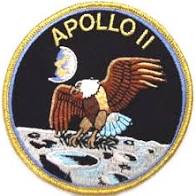
 2007 Medal Winner:  Team Moon, by Catherine Thimmesh.  Perfect timing!  We were reading this the very week that marked the 50th anniversary of the Apollo 11 mission.  “Team Moon” focuses upon critical challenges, last minute glitches, and the team of 400,000 focused professionals who supported the project that landed the first men on the moon.  We read about:

  • unexpected alarms (hearts in our throats)
  • potential fuel deficiency in the lunar module (hearts in our throats)
  • the space suits and shoes (requirements, construction, testing, testing, testing) (hearts in our throats when we read about Armstrong and Aldrin jumping up and down on the moon – disastrous if any seams had ripped)
  • the cameras (OK, this we could deal with, put us on the camera committee)
  • the potential for deadly bacteria/virus returning from outer space (hearts in our throats)
  • the parachute landing (hearts in our throats)
  • high winds in Australia that nearly prevented TV transmission (again, we could deal with this)

We learned that every aspect of Apollo 11 had a “backup program for the backup program for the backup program”, while acknowledging that any surprise from outer space could disable the mission at every single stage.  

We loved finding out why Armstrong and Aldrin shed their oxygen backpacks at the end of their moon walk and left them on the moon:  they needed the room in the lunar module for the moon rocks they were bringing back to earth!  (This book is so A+.) 

BTW,  here is something else we learned (via Wikipedia):  the moon is 240,000 miles away from planet Earth and the International Space Station is a mere 250 miles away.  We learned about the concept of “Low Earth Orbit”  (anything that orbits between 99 and 1,200 miles from the surface of the earth).  So, questions:  is the ISS in low earth orbit?  is the moon in low earth orbit?

Speaking of distances – A Farmer Brown story problem – Farmer Brown’s truck manages 22 miles on one gallon of gas.  Today, the truck has 2 gallons of gas left in the tank and Farmer Brown’s grandmother needs a ride into town to the beauty salon.  The beauty salon is 6 miles away, but on the way to the salon, Granny would like to stop at her friend Beulah’s house to return a cookie tray she borrowed for a tea party.  Beulah’s house is 10 miles beyond the beauty salon.  But before she can return the tray, Granny needs to go to the florist to buy Beulah a bouquet to thank her for lending the tray.  The florist is 3 miles in the opposite direction from the beauty salon.  Does Farmer Brown have enough gas in his truck to drive Granny to the florist, to Beulah’s, to the beauty salon, and then back to the ranch?  (answer at bottom of post)

Music to capture the triumph of the Apollo 11 mission –  we were looking for orchestral music that celebrated the can-do spirit of America, applauded the historical achievement, and conveyed JOB WELL DONE:

– Hoe-Down from Aaron Copland’s ballet (1942), “Rodeo” – EXCELLENT SELECTION:  a joyful, rambunctious dance of exhilaration.  A splendid performance by the National Youth Orchestra of the USA (2018):

– Theme from “Bonanza” TV show – EXCELLENT SELECTION:  composed by Livingston, Evans, and Rose for the Bonanza TV show (1959 to 1973).  A short, robust piece brimming with that American confidence:

– And then, HOO BOY:  my son and I took a listen to the #1 pop song of 1969:  “Sugar, Sugar”, by The Archies.  Let’s get this straight – the very same people who could collectively appreciate the magnitude of the moon landing listened to this song enough times to send it shooting up to the top of the “Billboard Hot 100” list.  Maybe we just needed something ridiculously uncomplicated.  “Sugar, Sugar” to the rescue! 

Welcome to the best part of my day!
– Jane BH
(story problem answer:  yes, barely.  Granny’s zigzag route to the beauty salon is 38 miles in length)

Brainiac!

chipotle cup

The Cup O’ Knowledge – Thank you Chipotle!  We love your “Cultivating Thought” author series (short essays on all sorts of interesting stuff printed up on the side of the Chipotle cups)!  This week, my son and I spent the necessary two minutes reading from the latest Chipotle cup about Albert Einstein’s theory of relativity.  Just so A+.  This motivated us to read through “On a Beam of Light” (also about Albert Einstein’s theory of relativity) by Jennifer Berne/illustrated by Vladimir Radunsky (just enough information for us non-physicist types, supported by dear, wispy illustrations that capture Einstein perfectly).

Alexander the Great – we finished our short study of Alexander the Great and came away with a few more vocab words: monsoon and mutiny.  MONSOON!  Rain, rain, rain, rain, rain.  MUTINY!  We thought about how a leader (like Alexander) could probably forget about being remembered as “beloved” if his soldiers felt compelled to stage a mutiny.

white rose

Farmer Brown Question – (here’s an abrupt change of mood):  Farmer Brown is in the white rose business! He sells LOTS of white roses for DIY wedding bouquets.  A nice bouquet uses a dozen roses, and Farmer Brown sells a “bouquet package” – the roses AND a “How to Fashion the Bridal Bouquet of your Dreams!” DVD for $40.   If he took in $240 this past month, how many weddings were enhanced with Farmer Brown’s roses?  Farmer Brown ALSO makes a “boutonniere package” for $10. If half of the “bouquet package” purchasers also bought a “boutonniere package”, how much more did Farmer Brown make on his white rose endeavor last month?

einstein violin

Music Focus – Einstein and his violin!  Back to Albert Einstein – we learned that Einstein played the violin with great skill, he said that helped him think better, and declared, “The most joy in my life has come to me from my violin.”   We learned that he preferred the compositions of Mozart, considering the violin serenades superior to the violin concertos.  We want to like what Einstein liked, so we listened to:

  • “Mozart’s Violin Serenade No. 6”, the “Serenade Notturna”, movement 4 (the rondo), composed in 1776.  Only about 3 minutes in length.

  • “Mozart’s Violin Serenade No. 13”, the super famous “Eine Kleine Nachtmusik”, movement 4 (the rondo – again!), composed in 1787.  About 4 minutes in length.

  • Finally! Look what we found! “Mozart’s Violin Sonata No. 26, in B-flat major” (composed in 1779), with an actual audio recording of Albert Einstein playing the violin!  My son really enjoyed the privilege of listening to this music, and viewing the accompanying photographs.

Welcome to the best part of my day!

– Jane BH