Summertime

The Spring Academic Banquet

Oooooh!  The Spring Academic Banquet! – actually, we host an academic banquet every night up in my son’s room.  Here is our basic template, gussied up to welcome spring – 

The hors d’oeuvre platter:  this past week, academic thinking mode was activated with mini warm-up exercises, along the line of:
– a word scramble (FLIDAFOD = DAFFODIL)
– iPad keyboard practice (sprout, trout, about, shout, clout, pout, grout)
– practicing: “>”(larger than) and “<“ (smaller than)
– matching:  composer and composition
– tracking the travels of Breton (our favorite shark) on ocearch.org
– ooohing and ahhhing over photos we took to celebrate my son’s 200th volunteer day at the local nursery. 

The main course:  two hearty, satisfying topics: 

The Physics Book, 250 milestones in physics, arranged chronologically by Clifford A. Pickover, published in 2011. Oh my gosh – I never thought we would be reading about physics and bless our hearts, we are pretty much not comprehending most of the entries – AND YET, we are LOVING THIS BOOK!   Each “milestone” gets a two page spread;  one page for an illustration/photograph and one page for historical references and technical, bewildering explanations.  We skip milestones that are too confusing for the likes of us (the majority of milestones) but – oh! – the feeling of elation when we find a topic we can grasp.

The sort of milestones we have skipped:
The Antikythera Mechanism
Coulomb’s Law of Electrostatics
Soliton

The sort of milestones that fill us with wonder:
the physics of the boomerang – dynamite – the hourglass – Ben Franklin’s kite
the acceleration of falling objects – X-rays – the stethoscope
the thermos – neon signs – Schrödinger’s cat (which we are familiar with thanx to BBT)

Here is something cool we learned: The first Nobel Prize (funded by the invention of dynamite, 1866) ever awarded went to Wilhelm Röntgen for his original work with X-rays (1895). 
This is the book we can’t wait to open every night!

– Polar Explorers – for Kids, Maxine Snowden.  We have just completed part one (Arctic explorers), and are geared up to start part 2 (Antarctic explorers).  Our globe and compass are out every night so we can trace routes attempted by the explorers.  We are now REALLY familiar with:
– the concept of the Northwest Passage 
– the contentious race to the North Pole 
– the difference between the geographic North Pole and the magnetic north pole
– our favorite explorer:  Fridtjof Nansen (brilliant, thoughtful, honest, focused) 
– our least favorite explorer:  Robert Peary (apparently a self centered #$%&+*&%$#)

The salad course:  a Farmer Brown story problem involving veggies necessary for perking up a bowl of tossed greens:

– Farmer Brown is teaching a gardening class the first Saturday of every spring month  (March, April, and May).  Students will be given gardening gloves, clay pots, potting soil and will learn how to plant radishes, cucumbers and tomatoes from seeds.  Farmer Brown figures to spend $15 on supplies per student and has priced the course at $25.
– If 15 eager beginner gardeners sign up for each class, how much profit will Farmer Brown realize? 
A)  $10     B)  $150     C)  $375     D)  $450
– How many students will Farmer Brown prepare for if 20% of the radish/cuke/tomato students decide to enroll in his “Let’s Grow Bell Peppers” summer class?
A)  9  students     B)  15 students     C)  20 students     D)  45 students
(answers at bottom of post)

The dessert:  the icing on our spring banquet cake:

We just finished “Grandpa’s Great Escape”, by David Walliams.   A lot of full throttle wackiness (story AND illustrations) in this book: can friendships, bravery, and a special relationship between a grandfather and his grandson triumph over the mean, the greedy, and the cheaters? (Of course they can, but hold onto your hat, cuz we found this book to be a roller coaster ride from start to finish.)  To top it off (icing on the cake), we learned a bit about the pride of Britain’s Royal Air Force of WWII:  the Spitfire!

Classical Music for a Spring Banquet – 

Spring”, from the “Victorian Kitchen Garden Suite”, composed by Paul Reade.  We learned that “The Victorian Kitchen Garden” was a British TV series, produced in 1987 (winning an award for best TV music in 1991).  The short recording we listened to features Emma Johnson (on clarinet), of the original theme soundtrack.  Perfect for spring, with bird song scattered throughout the piece –

Appalachian Spring”, music composed by Aaron Copland for Martha Graham in 1944.  We like the weirdly named “Doppio Movimento” section (yes, we looked this up, we understand what doppio movimento means, but we still think it is a weird name), a respectful interpretation of the Shaker hymn, “Simple Gifts”, accented with with regal fanfare and waves of majestic strength.  We listen for the spring raindrops (or is it the clip clop of horses’ hooves?).  We love this piece –

Spring Song”, composed in 1841 and found in Book 5 of Felix Mendelssohn’s “Songs without Words”.  We wonder whether Herr M would be amused that this piece would feature prominently in loads of cartoons (most notably, “Spring Song” was the central music theme of the 1939 “Daffy Duck and the Dinosaur” animated cartoon short).  Oh, the royalties he missed out on!

Welcome to the best part of my day!
– Jane BH
(story problem answers:  D)  $450 and A)  9 students)

Down the Rabbit Hole

This post is a bit different from my usual efforts.  We got side-tracked.  We went down the rabbit hole and this is how it happened.

First – In early August, I flew to San Francisco to spend a few days with a favorite family member (a postdoc at UCSF/we are ridiculously proud/his apartment is chaos).  Anyway, as we trekked around the hilly city we kept passing loads of friendly people decked out in tie-dyed shirts, emanating Eau de Weed, drawn to San Francisco that very weekend for the “60th anniversary of the Grateful Dead” festival.  Deadheads!  Well!  Interesting!

So then I thought, maybe I should put together a study unit on the hippie/flower child era to share with my son.

So then, to get things going, I procured a book that captured the vibes of the three day art and music festival that rocked the summer of 1969:  Woodstock, edited by Mike Evans and Paul Kingsbury.  Well organized information paired with intriguing photographs. (It is going to take us a long time to work through this book cuz a lot of the printing is done in what appears to be font size: 1 point.)  If it has to do with Woodstock, it is in this book:  the lead up, the venue choice, the sound system, the musicians, the lack of food concessions, the parking nightmare, the rain, the mud, etc.  Bottom line:  my son is in rapt attention mode when this book is opened.  So far, our favorite entries:

  • the Woodstock poster, an iconic image of the counterculture.  Graphic artist Arnold Skolnick was given the project on a Thursday and his design was due the following Monday.  He delivered.  (This prompted a mini discussion with my son about trusting your instincts when time is short. Not really sure this sunk in.)
  • the personal reflections of the performers, most of whom remember being quite nervous about performing for such a large audience (400,000 people.  That is kind of a lot).  They delivered.

So then, to enhance our immersion into the counterculture, we re-read (maybe for our 5th time, but now on high alert for the hippie nuances) Gordon Korman’s Schooled, and my son listened to (for at least the 100th time) the broadway show, Hair (1968), during nightly trampoline time.

So then, back to Woodstock:  after we pinpointed the Woodstock location on our map (upstate New York), we crossed the country to learn about the San Francisco-hippie era relationship, reading through the stunning Above & Across San Francisco book, edited by Sam Landers and Michelle Fitzgerald.  We really didn’t learn anything about the hippie era, but we were captivated by the collection of photographs showing the many best sides of San Francisco.

So then I thought, might we desire to spend a bit of time musing over the CRAZY fog that teases San Francisco?  News to us:  the fog has been named Karl.  We read Karl the Fog, written by Karl himself!  Loads of fab fog fotos accompanied by Karl’s sly way with words.

So then I thought, let’s get back to the hippie era:  since this study unit was inspired by the Grateful Dead festival, didn’t my son need to know a bit about this American rock band?  We Wikipediad up and read bits  about the Dead (and their technical catastrophes at Woodstock)/San Francisco/Jerry Garcia.  We listened and swayed back and forth to the welcoming, warm harmonies of  “Uncle John’s Band” (1969).  This piece is included on the Rock and Roll Hall of Fame’s “500 Songs that Shaped Rock and Roll”.

So then I thought, speaking of Jerry Garcia, maybe we should celebrate this unit with a scoop or two of “Cherry Garcia”, the Ben and Jerry ice cream flavor that  was developed in 1987.   Did my son love Cherry Garcia ice cream? YES.  Will Cherry Garcia be served on his upcoming birthday?  YES.

Lastly – I thought maybe we should learn something about the Ben and Jerry ice cream business, so we read The Sweetest Scoop, written by Lisa Robinson with the perfect accompanying watercolor illustrations by Stacy Innerst.  This book made us love Ben and Jerry’s even more.  Made us roll our eyes at a particular major corporation that blocked B and J ice cream from major grocery store chains for 4 years (FOR SHAME).

Yes, I would say we were officially down the rabbit hole:

San Francisco/Woodstock/Schooled/Hair
back to San Francisco/Karl the Fog/Grateful Dead

Cherry Garcia ice cream/the Ben and Jerry story

This was so much fun!
Welcome to the best part of my day,
– Jane BH

Hot Summer, Cool School

Neither snow nor rain nor blistering Texas heat and screaming cicadas nor gloom of night nor Christmas nor somebody’s birthday prevents us Cool School scholars from stories and studies every single night.  This learning hour is so uplifting and when I sign off “Welcome to the best part of my day”, I mean it.  High points from the past few weeks – 

Reading Comprehension: Clem and Clyde style – Our current reading comprehension endeavor (a one page sheet, once a week) focuses upon two free-spirited lads, Clem and Clyde, who sneak aboard trains and crisscross the USA.  My son independently reads the few short paragraphs and answers follow-up questions about Clem and Clyde’s gripping escapades (involving the likes of a popcorn factory, a cement potato, clown shoes).  So far, A+:  this is the type of thing my son likes to read and this is the type of thing I like to write.

Keyboard Practicing –  Three times a week I give my son a list of 6 rhyming words (for the repetition of letters)(the list is different every session).  I support his wrist as he types out the words on the iPad.  Words like:  rain – main – drain – plain – train – brain

Then I release my son’s wrist and it is time for him to press alphabet letters without support.  This is so far out of his comfort zone, but he has nailed “a”, “b”,  and now, “c”.  This is huge progress!

Space Station Quiz – My son and I (BOTH) learned something crazy-interesting from every single page of the Smithsonian “Behind the Scenes at the Space Stations” book, published in 2022 (so quite up to date).  We concluded with a 10 question quiz for which my son scored 100% and my UCLA roomie (so ya know she’s smart) from way back, scored 20%.  Here are 5 of the questions: (answers at bottom of post)

1).  How many times does the International Space Station orbit Earth in a 24 hour period?

          a)  2 times     b)  5 times     c)  10 times     d)  16 times

2)  “Tiangong” (the Chinese Space Station) is translated:

          a)  celestial palace     b)  high in the sky     c)  beautiful view     d)  our future

3)  How much preparation goes into a space walk?

          a)  no preparation is needed     b)  24 hours     c)  4 days     d)  2 weeks

4)  How long does it take from lift-off for a rocket to reach space?

          a)   5 minutes     b)  9 minutes     c)  23 minutes     d)  2 hours

5)  Space agencies involved with the ISS are supporting the endeavor through:

          a)  2024     b)  2028     c)  2030     d)  2050

Kindness Lesson – My son just finished his 80th volunteer day at a local garden center and was gifted a sweet house plant, with all 9 employees signing the clay pot.  I am not sure this meant much to my son, but the gesture melted my heart.  This nursery is a haven of tolerance, accommodation, and kindness.

Recently completed books and topics – trees, Spain, countries that use the Euro as their currency (Spain being one), and “Prince Caspian” (a sequel to “The Lion, the Witch, and the Wardrobe”). 

Story Problem from the Local Diner – The local diner is celebrating the sweltering days of summer with a root beer float promotion.  For the month of August, the floats (showcasing the diner’s house-made vanilla ice cream) will sell for $2 each, instead of the regular price of $3 each. The cost of making a root beer float is $1.

If the diner sells 150 root beer floats in August and sold 90 floats in July, which month showed the larger profit?  Was this promotion a genius idea, from a financial point of view?  (answers at bottom of post)

Classical Music for Soothing Summer Sounds – 

Fireflies – a movement from Amy Beach’s suite for piano, “Four Sketches”, composed in 1892.  FYI, Ms. Beach is recognized as being the first successful American female composer.  My son and I reserve this sparkling piece for summer listening only.  Summer Soother Rating:  5 stars out of 5 stars – 

Suite Populaire Brésilienne, movement 1 (the Mazurka-Chôro), composed by Heitor Villa-Lobos in 1928.  This is a relatively new piece for us:  a tender melody that alternates between pensiveness and hopefulness, played by classical guitar virtuoso, Pepe Romero.  Summer Soother Rating:  5 stars out of 5 stars – 

Sailing By, Ronald Binge, 1963.  This relaxing piece is broadcast via BBC Radio 4 before the late shipping report.  I think we have listened to this at least 300 times over the past 10 years.  We want to be on this boat.  Summer Soother Rating:  5 stars out of 5 stars –

Welcome to the best part of my day!
– Jane BH

(Space Station Quiz answers:  1)  d.  16 times, 2)  a.  celestial palace,  3) d.  2 weeks,  4)  b.  9 minutes,  5)  a.  2024)
(Local Diner story problem answers:  July showed the larger profit.  This was not a super smart promotion from a financial point of view)

A Little Night Music

piano and moon

Question 1:  If my son and I spend 15 minutes every night listening to classical music, how many hours of listening will we have stacked up over the course of a year? (answer at bottom of post)

Question 2:  If we average 3 pieces per evening, how many compositions will we have listened to over the course of a year? (answer at bottom of post)

I have been thinking it would be helpful to have a tab on title-block that would take us to a page where our music themes were listed.  So, OMGosh this has taken forever to assemble (and only includes music I have blogged about since July, 2014), but VOILA!  This post is now tabbed on title-block as “Our Music Themes“.

(This is merely a listing; to read a few short lines of information about each composition and find links to youtube videos of said compositions,  click on the links.)

Music Themes – Post Titles

Art set to music:  Checkered House, by Grandma Moses – from “Good Books, Bad Books

  • Over the River and Through the Wood – Lydia Maria Child
  • Sleigh Ride – Leroy Anderson
  • Carol of the Animals – Robert Davis

Art set to music:  Pirate Chief, by Howard Pyle – from “Fly By

  • The Maid of Amsterdam – traditional sea chanty
  • Overture to The Flying Dutchman – Wagner
  • Pirates of the Caribbean Suite – Klaus Badelt

Art set to music:  The Clipper Ship, by Currier and Ives – from “Garden Par-tay

  • Sea Songs – Ralph Vaughan Williams
  • Overture to H.M.S. Pinafore – Gilbert and Sullivan
  • Over the Waves – Juventino Rosas

Art set to music:  The Fall of the Cowboy, by Remington – from “Answers for Everything

  • Thanksgiving – George Winston
  • Hoedown – Aaron Copland
  • Back Home Again – John Denver

Back to School – from “If it’s August

  • Flight of the Bumblebee – Rimsky-Korsakov
  • Entry of the Gladiators – Julius Fucik
  • Song of the Volga Boatmen – traditional

Barbershop Quartetsfrom “The Cliffs Notes Version

  • Sincere – Meredith Willson
  • Mr. Sandman – Pat Ballard

Benjamin Franklin in France – from “It’s a Date!

  • Overture to The Abduction from the Seraglio – Mozart
  • The Coffee Cantata – JS Bach
  • Symphony No. 45 in F-sharp minor (Farewell Symphony) – Haydn

Black History Month Selections – from “Conversation Circle”

  • Maple Leaf Rag – Scott Joplin
  • The American Scene: The Southwest – William Grant Still
  • Don’t Get Around Much Anymore – Duke Ellington

Blue Days – from “Something Blue

  • Blue Skies – Irving Berlin
  • Blue Tango – Leroy Anderson
  • The Blue Danube Waltz – Strauss

Blue Moon Tunes – from “Second Time Around”

  • Moonlight Serenade – Glenn Miller
  • Rhapsody in Blue – George Gershwin
  • Clair de Lune – Debussy

Brazil, thinking about – from “Tick, Tick, Tick

  • exploring “The Little Train of Caipira” – Heitor Villa-Lobos

The Cambrian Explosion – from “In Which We Learn about the Cambrian Explosion

  • Simple Gifts – Joseph Brackett
  • Polka Dots and Moonbeams – Van Heusen/Burke
  • 1812 Overture – Tchaikovsky

Chicken Coop Melodies – from “Farm Fresh

  • Symphony No. 83 in G minor (The Hen) – Haydn
  • The Hen – Respighi
  • Pick-a-Little, Talk-a-Little – Meredith Willson
  • Chicken Reel – Joseph M. Daly/Leroy Anderson

Classical Broadway – from “Desperately Seeking Ganesha

  • Rosemary – Frank Loesser
  • Piano Concerto in A minor – Edvard Grieg
  • Baby Face – Akst/Davis
  • Hallelujah Chorus – Handel
  • Don’t Cry for Me, Argentina – Rice/Weber
  • Violin Concerto in D minor – Brahms

Cuckoo for Music – from “Things that go Bump in the Night

  • Organ Concerto No. 13 in F major (The Cuckoo and the Hen) – Handel
  • Symphony No. 6 in F major (The Pastoral) – Beethoven
  • The Cuckoo – Respighi

Dealer’s Choice (my son selects 3 from a list of 10) – from “Starry Eyed

  • The William Tell Overture – Rossini
  • The Cuckoo – Respighi
  • Mambo – Leonard Bernstein

Dental Procedures, music for – from “Messenger Service

  • Symphony No. 6 in F major (The Pastoral) – Beethoven
  • The Barcarolle – Jacques Offenbach
  • The Moldau – Bedrich Smetana

The Doldrums – from “Going Nowhere Fast

  • Sea Songs – Ralph Vaughan Williams
  • We Sail the Ocean Blue – Gilbert and Sullivan
  • Sailing By – Ronald Binge

Duets! – from “Sap Happy

  • The Flower Duet – Leo Delibes
  • Si Fino All’ore Estreme – Bellini
  • People Will Say We’re in Love – Rogers and Hammerstein

Einstein and his Violin – from “Brainiac

  • Violin Serenade No. 6 – Mozart
  • Violin Serenade No. 13 (Eine Kleine Machtmusik) – Mozart
  • Violin Sonata No. 26 in B-flat major – Mozart

Exotic Lands – from “That’s Gotta Hurt

  • Scheherazade – Rimsky-Korsakov
  • Overture to Abduction fro the Seraglio – Mozart
  • Arrival of the Queen of Sheba – Handel

Fanfare for the Water Bear – from “A Fanfare for the Water Bear

  • Water Music – Handel
  • The Aquarium – Saint-Saens
  • The Wild Bears – Sir Edward Elgar

Franz Schubert Night – from “Dr. Livingstone, I Presume?”

  • Serenade – Schubert
  • Ave Maria – Schubert
  • March Militaire – Schubert

French Composers – from “A Test of Faith

  • The Infernal Galop (The Can-Can) – Jacques Offenbach
  • Clair de Lune – Debussy
  • March of the Toreadors – Bizet

The French Horn – from “Working for Peanuts

  • Water Music – Handel
  • Venus – Gustav Holst
  • Pavane for a Dead Princess – Maurice Ravel

Fun Music Only – from “Inventors Invent

  • Dance of the Hours – Amilcare Ponchielli
  • Chicken Reel – Leroy Anderson
  • The Pink Panther – Henry Mancini

Good Shepherd – from “The Rattlesnake Sermon

  • Sheep May Safely Graze – JS Bach
  • He Shall Feed His Flock Like a Shepherd – Handel
  • Tender Shepherd – Charlap/Leigh

Groundhog Day – from “Rodent Rage

  • Winter – Vivaldi
  • Waltz of the Snowflakes – Tchaikovsky
  • Symphony No. 6 in F major – Beethoven
  • Put on a Happy Face – Strouse/Adams

Halloween, scary music for – from “Back in the Saddle Again

  • Dance Macabre – Saint-Saens
  • Mars – Gustav Holst
  • Masquerade – Khachaturian

Harp Music of the Angels – from “Sunday School

  • Harp Concerto in B-flat major – Handel
  • Harp Concerto in A major – Carl Ditters von Dittersdorf
  • Concerto for Flut and Harp – Mozart

The Hungarian March, 3 Ways – from “Travelogue

  • Hungarian March – Berlioz
  • Hungarian Rhapsody No. 15 – Liszt
  • Hungarian Dance No. 19 – Brahms

Hymns: three from one – from “Riveting

  • Ave Maria – Jacques Arcadelt
  • Symphony No. 3 in C minor (Organ Symphony) – Saint-Saens
  • Finlandia Hymn – Sibelius

Inventions for Inventions – from “Lights! Camera! Edison!

  • Invention No. 6 in E major – JS Bach
  • Invention No. 8 in F major – JS Bach
  • Invention No. 13 in A minor – JS Bach

London Busses – from “Late Bloomer

  • Jupiter – Gustav Holst
  • Pomp and Circumstance – Elgar
  • Fantasia on Greensleeves – Ralph Vaughan Williams
  • Overture to H.M.S. Pinafore – Gilbert and Sullivan

March Madness – from “Ranch Report

  • Colonel Bogey March – Lieutenant F.J. Ricketts
  • The Imperial March – John Williams

March’s Marches – from “Wordery

  • The Redetzky March – Johann Strauss, senior
  • March of the Siamese Children – Richard Rogers
  • The Washington Post March – John Philip Sousa

Mendelssohn’s Midsummer Night’s Dream – from “Flying, Farming, and Felix

  • Overture to Midsummer Night’s Dream – Mendelssohn
  • The Wedding March – Mendelssohn

Michelangelo’s Rome – from “One Sculptor, One Scoundrel

  • The Pines of Rome – Respighi
  • Palladio for String Orchestra – Karl Jenkins
  • Symphony No. 4 in A major (The Italian) – Mendelssohn

Minor Key Music – from “Miners and Minors

  • The Hebrides Overture – Mendelssohn
  • In the Hall of the Mountain King – Edvard Grieg
  • Ride of the Valkyries – Wagner

Minuet in G to the Power of 3 – from “Hendecasyllable

  • Minuet in G – Mozart
  • Minuet in G – Beethoven
  • Minuet in G – JS Bach

Mount Vesuvius – from “Mounting Interest

  • Funiculi Funicular – Luigi Denza
  • Aus Italien – Richard Strauss
  • Neapolitan Song – Rimsky-Korsakov

Music to Soothe – from “Music to Soothe

  • Mass in D minor, motet – Anton Bruchner
  • Sheep May Safely Graze – JS Bach
  • Simple Gifts – Joseph Brackett

Negro Spirituals – from “Heavenly

  • Down by the Riverside – traditional
  • Wade in the Water – traditional
  • Swing Low, Sweet Chariot – traditional

Nocturnes – from “Zootique

  • Nocturne No. 2 – Chopin
  • Nocturne No. 3 – Liszt
  • Harlem Nocturne – Earl Hagen

The Oboe – from “Music Mechanics

  • Arrival of the Queen of Sheba – Handel
  • Swan Lake, final scene – Tchaikovsky
  • Le Tombeau de Couperin – Ravel

Overtures – from “Takes a Lickin’ and Keeps on Tickin‘”

  • Overture from H.M.S. Pinafore – Gilbert and Sullivan
  • Overture from Midsummer Night’s Dream – Mendelssohn
  • Overture from The Marriage of Figaro – Mozart

Paris Tribute – from “A Ghost by any other Name

  • The Swan – Saint-Saens
  • Carillon – Bizet
  • La Vie en Rose – Edith Piaf

Pizzicato! – from “The Price is Wrong

  • Divertissement: Pizzicati – Leo Delibes
  • Symphony 4 in F minor – Tchaikovsky
  • Anitra’s Dance – Edvard Grieg

The Presidents’ Music – from “The Liberace Instigation

  • classical pieces composed during each administration

The Recorder – from “Well Played

  • Sopranino Recorder Concerto in C major – Vivaldi
  • Ode to Joy – Beethoven
  • Greensleeves – traditional

The Sad Song Scale – from “Two Different Worlds

  • Symphony No. 3 in F major – Brahms
  • What’ll I Do? – Irving Berlin
  • Serenade – Schubert

Saint Patrick’s Day – from “The Business of March

  • Toora Loora Looral – James Royce Shannon
  • The Irish Washerwoman – traditional/Leroy Anderson
  • Danny Boy – Frederic Weatherly

Shrill Thrills! (the piccolo) – from “Jams and Jellyfish

  • Chinese Dance (Nutcracker) – Tchaikovsky
  • Triton Fountain in the Morning – Respighi
  • Stars and Stripes Forever – Sousa

Strauss Family, the splendidly gifted – from “780 Pairs of Saddle Shoes

  • Radetzky March – Johann Strauss, senior
  • Feuerfest Polka – Joseph Strauss
  • Thunder and Lightning Polka – Johann Strauss, junior

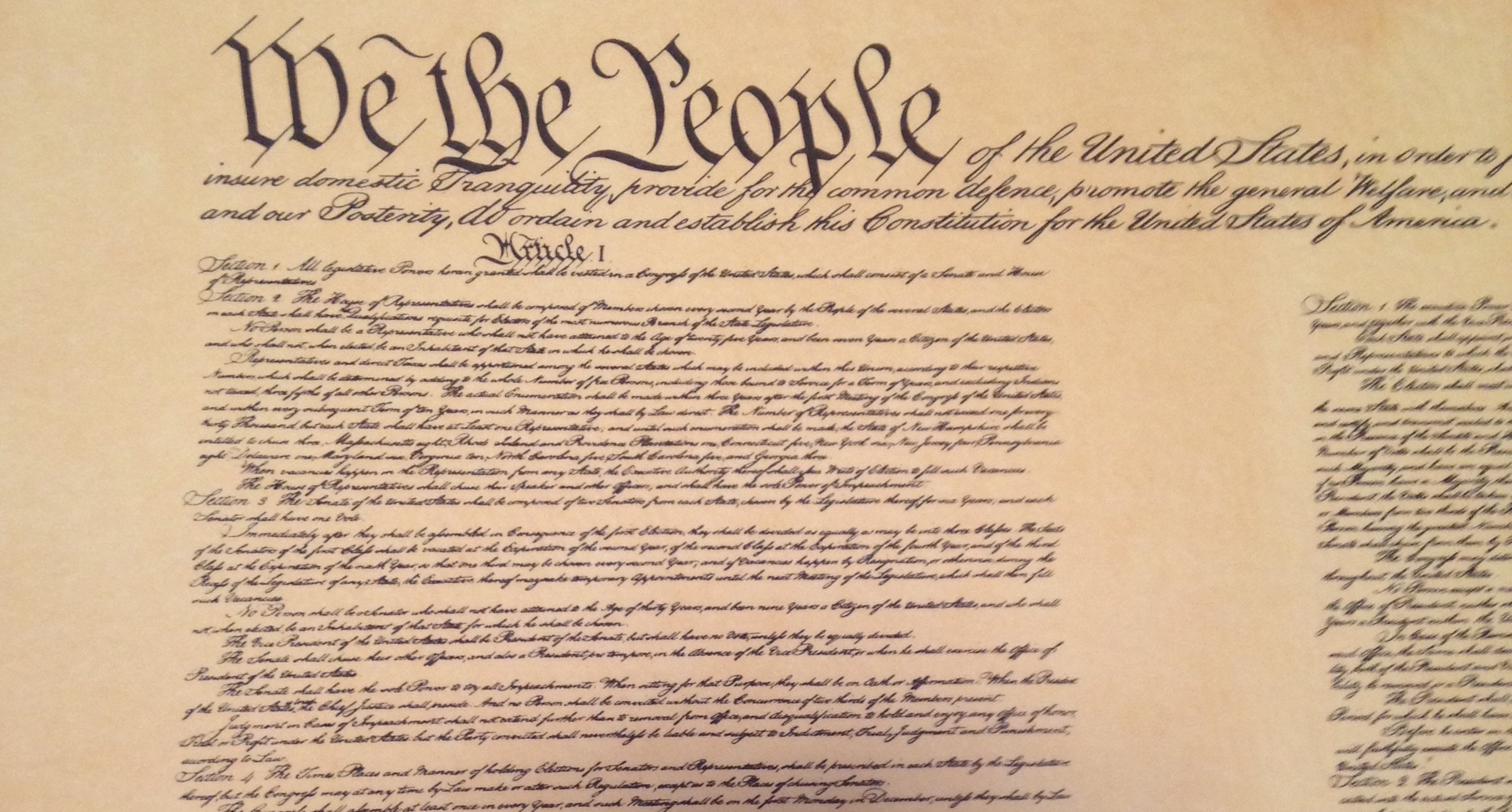
String Quartets – from “We the People

  • String Quartet in B-flat major (La Chasse) – Haydn
  • String Quartet No. 2 in D major – Borodin
  • Cantina Band (performed as a string quartet) – John Williams

Summertime – from “Barely Scraping By

  • Summer – Vivaldi
  • Fireflies – Amy Beach
  • Summertime – George and Ira Gershwin
  • In the Summertime – Mungo Jerry

Sunday Night Music – from “How We Write

  • How Great Thou Art – Carl Gustav Boberg
  • Turn! Turn! Turn! – Pete Seeger/Book of Ecclesiastes
  • Let us Cheer the Weary Traveler – Nathaniel Dett

Surprise Endings – from “Bringing Handwriting up to Scratch

  • The Wild Bears – Sir Edward Elgar
  • The Moldau – Bedrich Smetana
  • The Imperial March – John Williams

Tambourines! – from “Peace, Love, and Tambourines

  • Mr. Tambourine Man – Bob Dylan
  • Tarantella – Rossini/Respighi
  • Russian Dance (Nutcracker) – Tchaikovsky

Tea Time – from “Textbooks – if we ruled the world

  • Tea for Two – Youmans and Caesar
  • Tea for Two (Tahiti Trot) – Shostakovich
  • Tea for Two – Art Tatum

Things in the Sky – from “Snakes and Pirates

  • Fireflies – Amy Beach
  • Clair de Lune – Debussy
  • Mercury – Gustav Holst

The Timpani – from “One Thing Leads to Another

  • Dance of the Seven Veils – Richard Strauss
  • Thus Spoke Zarathustra – Richard Strauss
  • Pirates of the Caribbean Suite – Klaus Badelt

Trains – from “Posting about Posters

  • The Little Train of Caipira – Heitor Villa-Lobos
  • The Steam Engine – Patrick Doyle
  • Take the A Train – Duke Ellington

Tribute: music for a beloved grandfather – from “Imagine That

  • Fight for California – McCoy/Fitch
  • The Army Song – Sousa/Arberg
  • Ashokan Farewell – Jay Ungar

The Vatican, background music for – from “Holy Zucchetto

  • Gregorian Chants – traditional
  • Gloria in Excelsis Deo – Vivaldi
  • Locus Iste – Bruchner

Virtuoso Night: Stanley Drucker – from “Affordable Housing Forever

  • Clarinet Sonata No. 1 in F minor – Brahms
  • Appalachian Spring – Aaron Copland
  • Rhapsody in Blue – George Gershwin

Virtuoso Night: Sir James Galway – from “Thousands and Thousands

  • Concerto for Flute and Harp – Mozart
  • I Saw Three Ships – traditional
  • Flight of the Bumblebee – Rimsky-Korsakov

Virtuoso Night: Wynton Marsalis – from “Novel Ideas

  • Concerto in E-flat major for Trumpet – Haydn
  • Moto Perpetuo – Paganini
  • The Prince of Denmark March (Trumpet Voluntary) – Jeremiah Clark

Virtuoso Night: Itzhak Perlman – from “Insert Clever Title Here

  • Humoresque – Dvorak
  • Out of Africa, title music – John Barry
  • Violin Concerto in E minor – Mendelssohn

Waltzing with Tchaikovsky – from “Case in Point: Ibn Battuta

  • Serenade for Strings – Tchaikovsky
  • Swan Lake Waltz, Act II – Tchaikovsky
  • Eugene Onegin, Polonaise – Tchaikovsky

Wistfulness – from “Finish the Poem

  • Romeo and Juliet Fantasy Overture, love theme – Tchaikovsky
  • Ashokan Farewell – Jay Ungar
  • What’ll I Do – Irving Berlin

Worker Bees, a soundtrack for – from “Bee Plus!”

  • Moto Perpetuo – Paganini
  • The Pizzicato – Leo Delibes
  • Flight of the Bumblebee – Rimsky-Korsakov


Welcome to the best part of my night!
– Jane BH
(answer 1:  91+ hours)
(answer 2:  1,095 pieces of music)

Barely Scraping By

green radargreen radargreen radar

I think I can put my finger upon one of the reasons I was barely scraping by (as far as grades go) in high school. SKIMMING. When I had to read something I was not interested in (i.e. textbooks), I SKIMMED.  My eyes were like radar screens, rapidly scanning every page for ANYTHING AT ALL that might prove interesting.  I evidently missed a great deal of information.  Cutting to the present: when I read aloud to my son, I wouldn’t dream of skimming.  And guess what? I am learning all kinds of stuff I probably should have learned during my formative years.   So, silver lining time:  my son learns something new and I learn something new, too.  I am grateful.

Current non-fiction studies: world religions – last night we were reading about Buddhism (“Usborne Book of Religions of the World”: A+), and non-vertebrate marine life – so elegantly photographed (“Spineless” by Susan Middleton: A+).

Current fiction: “Hatchet”, by Gary Paulsen (this is our third time through, and it is still riveting and important).

quill pen

Contemplating the quill pen: My son and I are learning about quill pens – the writing instrument of choice until the mid 1800s – so we thought we would try writing with one.  Holy cow, what a colossal mess! BLOTCH. DRIP. SPLOTCH.  Of course we had the cheapest of the cheap feather pen sets, so this may have been the problem (seriously, this WAS the problem), but it brought us to a new appreciation of documents such as the Declaration of Independence, which were handwritten with a quill pen. What an elegant hand penned the Declaration – not one inkblot or drip.

declaration    blotches

Last night’s story problem from “Le Fictitious Local Diner” – During the cold and flu season, townspeople flock to the diner to purchase quart upon quart of chicken soup to bring home. The diner uses organic chicken, celery, carrots and onions to make their soup and can make a gallon for $12.00. They sell a quart for $8.00. Each year the diner manages to sell 200 quarts of the chicken soup. What is their profit?

Last night’s music theme – “Summertime”.  This past week, the outside temp hovered around 30 degrees.  We needed to think about weather that was at least 50 degrees warmer, so we listened to –

  • “Summer” from Vivaldi’s “Four Seasons”, composed around 1720. (needs no comment)
  • “Fireflies” from Amy Beach, composed in 1892. This piano piece sparkles. It is one of our favorites.
  • “Summertime” from George Gershwin’s “Porgy and Bess” (1935). We listened to Ella Fitzgerald and Louis Armstrong sing – wow. Wow. Wow.
  • “In the Summertime” by Mungo Jerry, obviously not a melody that can compete with the others we listened to, and yet, this could be the consummate summer-vacation song.  Ridiculously rambunctious fun.

Welcome to the best part of my day!

– Jane BH