YouTube

Barely Scraping By

green radargreen radargreen radar

I think I can put my finger upon one of the reasons I was barely scraping by (as far as grades go) in high school. SKIMMING. When I had to read something I was not interested in (i.e. textbooks), I SKIMMED.  My eyes were like radar screens, rapidly scanning every page for ANYTHING AT ALL that might prove interesting.  I evidently missed a great deal of information.  Cutting to the present: when I read aloud to my son, I wouldn’t dream of skimming.  And guess what? I am learning all kinds of stuff I probably should have learned during my formative years.   So, silver lining time:  my son learns something new and I learn something new, too.  I am grateful.

Current non-fiction studies: world religions – last night we were reading about Buddhism (“Usborne Book of Religions of the World”: A+), and non-vertebrate marine life – so elegantly photographed (“Spineless” by Susan Middleton: A+).

Current fiction: “Hatchet”, by Gary Paulsen (this is our third time through, and it is still riveting and important).

quill pen

Contemplating the quill pen: My son and I are learning about quill pens – the writing instrument of choice until the mid 1800s – so we thought we would try writing with one.  Holy cow, what a colossal mess! BLOTCH. DRIP. SPLOTCH.  Of course we had the cheapest of the cheap feather pen sets, so this may have been the problem (seriously, this WAS the problem), but it brought us to a new appreciation of documents such as the Declaration of Independence, which were handwritten with a quill pen. What an elegant hand penned the Declaration – not one inkblot or drip.
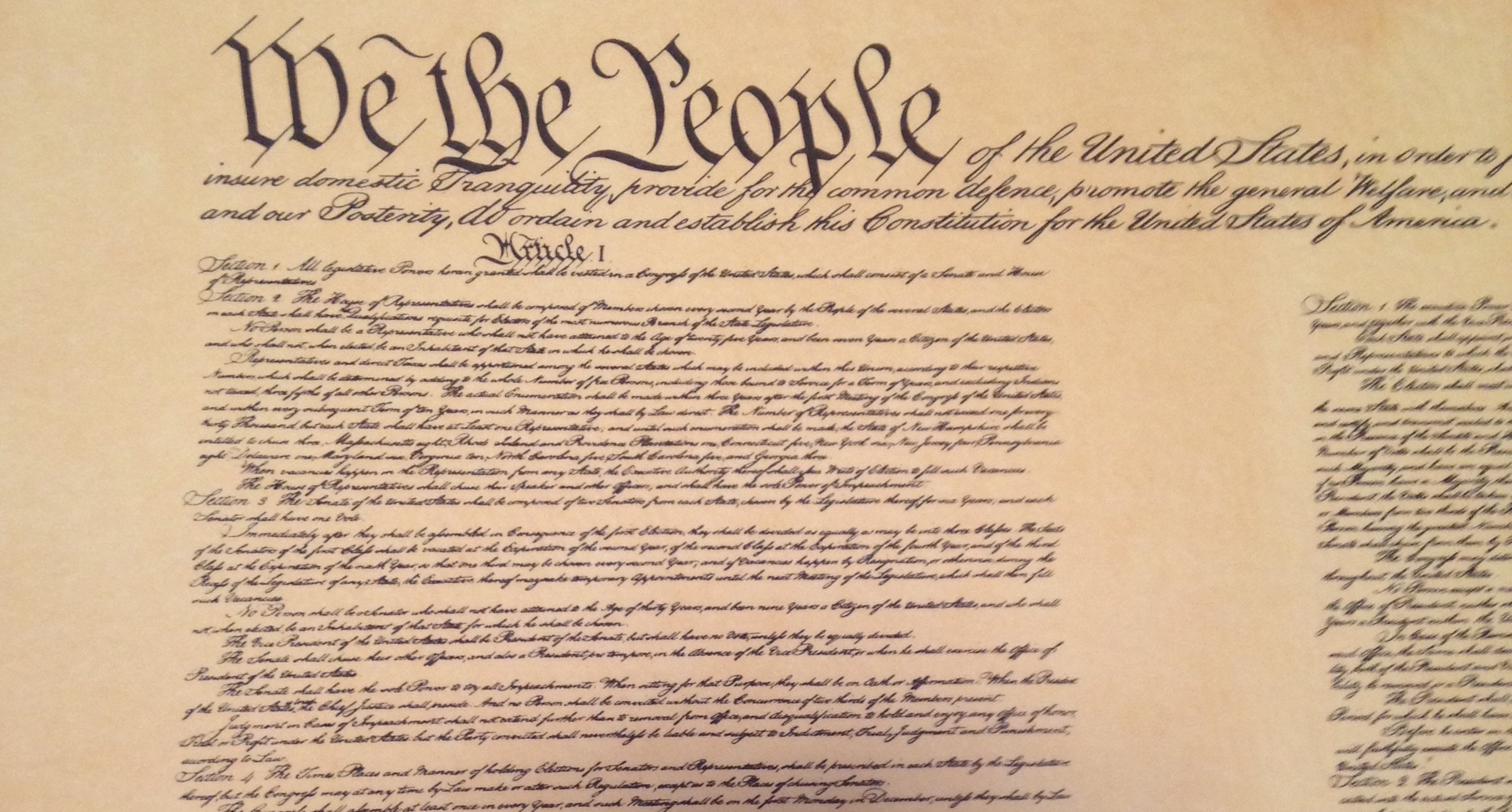
declaration    blotches

Last night’s story problem from “Le Fictitious Local Diner” – During the cold and flu season, townspeople flock to the diner to purchase quart upon quart of chicken soup to bring home. The diner uses organic chicken, celery, carrots and onions to make their soup and can make a gallon for $12.00. They sell a quart for $8.00. Each year the diner manages to sell 200 quarts of the chicken soup. What is their profit?

Last night’s music theme – “Summertime”.  This past week, the outside temp hovered around 30 degrees.  We needed to think about weather that was at least 50 degrees warmer, so we listened to –

  • “Summer” from Vivaldi’s “Four Seasons”, composed around 1720. (needs no comment)
  • “Fireflies” from Amy Beach, composed in 1892. This piano piece sparkles. It is one of our favorites.
  • “Summertime” from George Gershwin’s “Porgy and Bess” (1935). We listened to Ella Fitzgerald and Louis Armstrong sing – wow. Wow. Wow.
  • “In the Summertime” by Mungo Jerry, obviously not a melody that can compete with the others we listened to, and yet, this could be the consummate summer-vacation song.  Ridiculously rambunctious fun.

Welcome to the best part of my day!

– Jane BH

Imagine That

Back to Kansas – Last night we finished reading “The Wonderful Wizard of Oz”, but we weren’t ready to put the book away until we discussed the concept of IMAGINATION.  We defined imagination (forming mental images of things not perceived by the senses) (then we had to discuss the definition) and we acknowledged the relentless imagination of author L. Frank Baum:  winged monkeys, a magical golden cap, a tin man, a country of movable china figurines, Winkies, Munchkins, Quadlings, and on and on.  We thought Baum’s imagination well matched with the imagination of contemporary illustrator, Olimpia Zagnoli. Enjoying all aspects of this book was such a worthy use of our time.

 cat mouse      oz book      cyclone

Math Surprise – A few nights ago my son had to multiply 9 x 16 and I was stunned by the speed with which he arrived at the answer.  Like in 0 seconds.  Was this a fluke?  Was my hand guiding his answer?  Last night, I set up multiplication and division problems that were difficult enough for me to have to figure out ahead of time.  I used a multiple-choice format on his iPad, so I would not be directing his hand.  He again answered swiftly and correctly, calculating in his head.  The bummer here is that if he is a bright as I think he is, this will place me as the WEAKEST INTELLECTUAL LINK in our family. DRAT.

snowball

Last night’s “Farmer Brown Story Problem” revolved around Farmer Brown’s idea to store snowballs in his large freezer (with the intention of bringing them out for surprise treats on the Fourth of July).  We had to review the concept of cubic feet.  We figured out how many snowballs would fit into one cubic foot and then it was easy to calculate how many snowballs would fit into Farmer Brown’s 18 cubic foot freezer.

Poems of Tribute – last night we acknowledged the 7th anniversary of my father (my son’s grandfather) passing on, by reading a few poems that honored this really neat man.

  - the kind of grandfather that would take a kid fishing -

– the kind of grandfather that would take a kid fishing –

  • Because he loved deep-sea fishing, we read “Sea Fever” by John Masefield
  • Because he grew up in San Francisco, we read “Fog” by Carl Sandburg
  • Because this seemed like a message a grandfather would give to his grandson, we read “If” by Rudyard Kipling

Music of Tribute – we selected melodies that would have pleased my son’s grandfather .

  • Because he was a UC Berkeley alum, we listened to “Fight for California”

  • Because he had been an Army engineer during WWII, we listened to “The Army Song”

  • Because we needed to say goodbye again, we listened to “Ashokan Farewell” by Jay Ungar

Welcome to the best part of my day!

– Jane BH

Textbooks – if we ruled the world

We want textbooks that make us pay attention  –

  • by captivating us with quirky information
  • by taking us behind the scenes, so that we gain a sympathetic understanding of the facts
  • by luring us in with intriguing graphics

textbooks 5

We want textbooks that we cannot wait to open each night.  Books like these:

  • Usborne Books – “Explorers”: so excellent
  • DK Eyewitness Books – “Gandhi”: perfection
  • Peter Sis Books – WHOA. Works of art with great information. We learned so much about Columbus, Darwin, and Galileo from the Sis books.
  • Bill Nye Books – information peppered with funniness and energy
  • Stephen and Lucy Hawking Books – “George’s Secret Key to the Universe” and “George’s Cosmic Treasure Hunt”, both make staggering concepts easy to understand by deftly weaving them into story format.
  • “Music Was It” by Susan Goldman Rubin – such an interesting biography of Leonard Bernstein
  • “Professor Astro Cat’s Frontiers of Space” by Dominic Walliman and Ben Newman – anybody who reads this blog knows that we LOVE-to-the-power-of-10 this book.
  • “Moonshot” by Brian Floca – spectacular book about the flight of Apollo 11
  • “A Child’s Book of Art” by Lucy Micklethwaite – my son LOVES this book. He reads it every day, and we are on our third copy.
  • “A Really Short History of Nearly Everything” by Bill Bryson – quirky information delivered in enthusiastic Bryson style

tip jar

Last night’s story problem from “Le Fictitious Local Diner” – There are 3 waitresses working the morning shift at the café, and on Saturday, they split a tip jar that contained $57.  The 4 waitresses that work the afternoon shift split a tip jar that contained $78.  Who went home with more tip money – a morning or an afternoon waitress?

 tea cups

Last night’s music program celebrated TEA TIME. We learned about theme and variation and the concept of orchestration by focusing upon the classic American sweetheart melody, “Tea for Two”.

  • First, “Tea for Two”, written by Vincent Youmans and Irving Caesar for the 1924 Broadway smash-hit, “No, No, Nanette”.  ADORABLE (and makes us want to know what a sugar cake is).

  • Second, “Tea for Two” as interpreted by Dmitri Shostakovich in 1927. Long story short: Shostakovich won 100 rubles by re-orchestrating “Tea for Two” in less than one hour, after listening ONE TIME to a recording of the song. It SPARKLES!

  • Next, in 1939, jazz pianist great, Art Tatum put his spin on “Tea for Two”. FANTASTIC.

  • And then, oh my gosh, The Lawrence Welk TV Show (1951-1971) featured “Tea for Two” SIXTY SEVEN times during the course of its long broadcast run. I just don’t know what to say about this variation; I am still stunned on so many levels. On the plus side, my son was mesmerized by the two musicians demonstrating such skill on (the duck-billed platypus of instruments) the accordion.

 Welcome to the best part of my day!

– Jane BH

Mounting Interest

Mount Everest

Our Wonders of the World unit: last night, Mount Everest.  Mount Everest is 29,029 feet above sea level at the summit (the summit being about as big as my son’s bed – we spent a few minutes thinking about whether we could be up so high, standing on something so small without freaking out and throwing up).  But back to the height:  when we fly to LA, our cruising altitude is not that much higher than the top of Mount Everest.  Wouldn’t it be weird to be in a plane, just about cruising altitude and look eye to eye with a person outside the airplane?  This puts the size of the Everest into a perspective that forces us to understand that THIS IS ONE GIANT MOUNTAIN.

New unit: George Ohr, potter. We started a most interesting book, “The Mad Potter, George E. Ohr, Eccentric Genius”. George Ohr (1857 – 1918) tried/failed about 14 different career paths before he was trained in ceramics.  In his own words, he “took to the potter’s wheel like a duck to water”. My son needed to know what a potter’s wheel looked like, so we viewed a neat video of a skilled potter throwing a pot.  He was spellbound as the solid lump of clay was transformed into a rather large bowl. Here is the video we watched:

Last night’s music theme celebrated Mount Vesuvius!

funicular illustration

Here is the story:  in 1880, a local journalist (Peppino Turco) teamed with composer Luigi Denza to create the immensely popular “advertising” jingle, “Funiculi Funicula”, commemorating the grand opening of a funicular cable car up the side of Mount Vesuvius. The original words are essentially “ride the totally cool cable car to the top of the mountain, see what you can see, bring a love interest”. The song went as viral as viral could be in 1880.

THEN!  Only 6 years later, composer Richard Strauss was touring Italy, heard the song – thought it was an old traditional Neapolitan theme – and wove it into movement 4 of his “Aus Italien” tone poem. Bad surprise: Denza sued Richard Strauss, won the lawsuit, and Strauss paid royalties every time “Aus Italien” was performed.

THEN!  (here we go again) 21 years after the Denza vs. Strauss dust-up, Nicolai Rimsky-Korsakov was touring Italy, heard the song – thought it was an old traditional Neapolitan theme – so he polished it up for full orchestra and it became “Neapolitan Song”.  He apparently was not sued. This is a sparkling orchestration, but my son and I think the original, unrefined rendition is THE BEST. (spoiler alert:  this is a flawed video visually – you will see what I mean immediately, but Pope Benedict is in the audience, so that is pretty awesome)

Final note:  Vesuvius is a dormant volcano, but in 1944 it erupted and the cable car was a casualty.  Rats.

Welcome to the best part of my day!

– Jane BH

How We Write

 handwriting photo

We Write – For the past few nights, we’ve begun STORIES AND STUDIES with handwriting practice.  There were years and years when my son could not manipulate a pencil of any size.  Even now, he cannot write independently, but the photo shows our progress.  On the left side of the page, I held the pen and my son grasped my fingers and pushed the pen around. On the right side of the page, my son held the pen and I supported his wrist.  I am thrilled that the words are finally legible. One thing that helps, is giving my son a rectangle to write into.  Without the rectangle outline, a single word scrawl can take up half of the page. BTW, what we have here are the states that we have lived in.

space books

We Read – After handwriting, we moved on to an exceptional A++++ book about the universe: “Professor Astro Cat’s Frontiers of Space” by Dr. Dominic Walliman and Ben Newman.  Last night we learned about the construction of the space suits that Buzz Aldrin and Neil Armstrong wore for man’s first walk on the moon.  This book is comprehensively researched, utterly interesting, and graphically outstanding. We purchased it from the Boeing Store, which was kind of neat, too.  It is a worthy companion to a book we read a few months ago, “MOONSHOT” by Brian Floca.  Extraordinary.  These are both informative, elegant books for everybody. Absolutely NOT just for children.

Le Fictitious Local Diner Story Problem – Last night’s question revolved around the annual cost of catsup for the diner. We started out with an insultingly easy trick question: If the diner goes through 7 giant bottles of catsup every week, how many bottles does the diner go through in a year?

Farmer Brown’s Story Problem – Farmer Brown wants to gussy up his front porch before all the relatives arrive for Thanksgiving, so he is going to order new rocking chairs for the porch. Wicker chairs run $200 and oak rocking chairs run $450. He has decided on 2 of each. Don’t start adding up the total yet. The wicker chairs need tie-on cushions at $35 each. And then there is 10% tax. Now, how much will Farmer Brown spend on the new rocking chairs?

Our Sunday Night Music – We listen to church-type music every Sunday night.  Last night’s selections:

  • “How Great Thou Art” – we love the comforting and humbling version by Alan Jackson.
  • “Turn! Turn! Turn!” – by The Byrds: a nod toward Ecclesiastes and a nod toward the late 1960’s.  Timeless.
  • “Let Us Cheer The Weary Traveler” – by Nathaniel Dett and sung by the Nathaniel Dett Chorale. Nathaniel Dett, a Canadian, was composing at the turn of the 20th  century.  His works are described as combining the style of European Romantic music (essentially meaning classical music of the 1800’s) with American Spirituals. This piece is one of our favorites. (Regarding the youtube link:  the real chorus begins about 30 seconds into the video.)

Welcome to the best part of my day!

– Jane BH

Music Mechanics

HOW WE GET THE MUSIC THAT WE LISTEN TO: TUTORIAL

If you are under 40, this post will make you roll your eyes, so it is best that you log off immediately.  If you are over 40 (which is a nice way of saying, “if you are over 50”) I am going to gently explain how I find the music that my son and I listen to during STORIES AND STUDIES.

For this tutorial, please enjoy a mock phone conversation between my mother (in California) and me (in Texas).  FYI, my mother, “The Peach”, is 92 and is pretty much with it.  She 1) has a personal trainer and 2) was explaining just yesterday how to recognize a Tesla car.  When it comes to computers, NOT SO MUCH.  She has had her own gigantic Apple computer for several years, but it was only recently that she stopped trying to “set the margins” when she was composing an email.

So, the conversation –

The Peach:  I want to listen to the music that you listen to during STORIES AND STUDIES.  How do I do it?

Me:  There are a couple of ways. Do you want the long (permanent) or short (temporary) version?

The Peach:  Let’s start with the short version.

Me:  OK.  Write this down:

  • Turn on your computer
  • Log on to YouTube

Once you are on the YouTube website, type in the name of the classical piece you want to listen to into their search box.  Most likely, a series of suggestions will pop up. Scan through the suggestions. Find one that looks interesting, click on it, and enjoy!

The Peach:  How much is this going to cost?

Me:  Nothing!

The Peach:  Are all of the classical music videos on YouTube of the same quality?

Me:  No.  Anybody can submit to YouTube.

The Peach:  OK, what is the long version?  What if I want to have the music with me, to listen to in the car or whatever.  I can’t be logging onto YouTube every time I want to listen to something.  What if I want to own the music permanently?

Me: This is very exciting!  You are really a woman of the 21st century!  Here is what you need:

  • your computer
  • an iPod

The Peach: I am ready! (we are skipping the part about having to purchase an iPod)

Me:  Write this down:

  • Turn on your computer
  • Log onto Amazon

In the Amazon search box, write the name of the composition you are trying to find. A number of suggestions will pop up. You want one from the “digital music” category.

The Peach:  OK, I typed in “Beethoven’s 5th Symphony” and about a thousand suggestions popped up.  How do I choose?

Me:  Good question! Amazon does let you sample 30 seconds of any piece, but with so many to choose from, the first thing I do to narrow down the search is to look for a well-known orchestra or conductor.

The Peach: Well, for heavens sakes, this is something I don’t know anything about. How can I speed up this process?

Me:  Ask me!  I LOVE researching music!  Ask me and I will tell you exactly what recording I have chosen for which composition.

The Peach:  So, now that I have selected a recording, what do I do next?

Me:  Purchase the piece from Amazon. They make it very easy and it is quite inexpensive  (about 99 cents per song).  Moments after the purchase, the music is magically transferred to your iTunes music file!

The Peach: So, it is SOMEHOW now on my computer?

Me:  Yes!

The Peach:  But don’t I have to do something to get it onto my iPod?

Me:  Yes.  Here comes more magic!  Cable your iPod to your computer and the music will automatically transfer.

The Peach: That’s it?

Me: That’s it!

The Peach: What did you listen to last night?

Me: Last night’s theme was “Celebrating the Oboe” – we focused on the piercing, exotic, snake-charmer sound of the oboe.

oboe ipod

  • Handel’s, “Arrival of the Queen of Sheba”,  from Handel’s oratorio, “Solomon”.  This piece features 2 oboes in marvelously intertwining harmony.
  • Tchaikovsky’s final scene from “Swan Lake” – about one minute into the piece, the oboe is fully in charge of the haunting melody.
  • Maurice Ravel’s “Le Tombeau de Couperin” – which showcases the capabilities of the oboe to perfection.  The entire piece lasts about 18 minutes, but this youtube link captures a 3 minute slice.  An excellent introduction to the oboe.

Welcome to the best part of my day!

– Jane BH